High-density tungsten alloys are a class of alloys with tungsten as the matrix, incorporating small amounts of transition elements such as nickel, iron, copper, cobalt, and chromium as binder phases [1-3]. Due to their high density, high melting point, high strength, and certain radiation shielding capabilities, they are currently widely used in military fields such as kinetic energy armor-piercing projectiles and warhead fragments, as well as in aerospace and nuclear industries [4-6]. Industrial tungsten alloys primarily fall into two categories: W-Ni-Cu and W-Ni-Fe [7]. Compared to W-Ni-Cu alloys, W-Ni-Fe alloys exhibit higher density, tensile strength, and corrosion resistance, making them more widely adopted in military weaponry, aerospace, and nuclear industry materials [8-9].
As a material characterized by high melting point, high brittleness, and superior mechanical properties, the earliest forming process for tungsten alloys was liquid phase sintering (LPS). However, this process struggles to produce complex geometries [10]. Additionally, components produced via LPS may exhibit density inhomogeneities, limited surface quality, and poor dimensional stability [11], failing to meet the demands for complex part formation. Powder extrusion and powder injection molding (PIM) can achieve complex structures, but require the addition of forming aids during processing. These aids often introduce impurity elements, significantly compromising the alloy's mechanical properties [12]. Furthermore, powder extrusion and powder injection molding face limitations including relatively complex processes, higher forming costs, and the necessity for molds [13]. Discharge plasma sintering [14], characterized by low sintering temperatures and short processing times, has also been applied to tungsten alloy fabrication. However, these methods still exhibit significant shortcomings in forming components with complex, irregular structures [15].
Additive manufacturing, also known as 3D printing technology, is an advanced manufacturing technique that uses computer-controlled, layer-by-layer deposition of material based on digital models to build physical objects. This technology offers high flexibility to the manufacturing industry, enabling the production of complex geometries and customized products while reducing material waste and energy consumption [16]. In recent years, advancements in additive manufacturing have opened new possibilities for producing tungsten alloy components. Compared to traditional methods, this approach enables near-net-shape fabrication without requiring molds, offering unique advantages for manufacturing complex structures [17]. For instance, laser selective melting technology employs a high-energy laser beam to scan metal powder layer by layer, rapidly heating specific areas above the melting point to liquefy the metal. Repeating this process of layer-by-layer melting and powder deposition ultimately constructs high-performance metal parts with intricate geometries [18]. Utilizing a laser as the high-energy heat source makes this method suitable for forming refractory metals [19-20]. Currently, researchers worldwide have successfully fabricated high-strength tungsten alloy components, though these often exhibit poor plasticity [21-22].
This paper focuses on the global progress in additive manufacturing of tungsten alloys, comparing the advantages and disadvantages of components formed by different processes. It explores factors influencing the strength and toughness of fabricated parts and analyzes future development trends.
1 Additive Manufacturing Technologies for Tungsten Alloys
Additive manufacturing techniques suitable for refractory metals primarily include selective laser melting (SLM), laser melting deposition (LMD), and selective electron beam melting (SEBM) [23-24]. Currently, researchers worldwide have extensively studied SLM, LMD, and SEBM additive manufacturing technologies for high-density W-Ni-Fe alloys [25-27], high-density W-Ni-Cu alloys [28-29], and pure tungsten [30-32]. Additionally, binder jet printing (BJP) [33] and powder extrusion printing (PEP) [34]—a recently developed technique combining “additive manufacturing + powder metallurgy”—can be utilized for preparing high-density tungsten alloys due to their unique printing processes and capability to handle high-melting-point metal powders.
1.1 Laser Selective Melting of Tungsten Alloys
As a powder bed fusion additive manufacturing method, SLM technology operates by first spreading pre-formed metal powder evenly across the build platform using a blade to form a thin powder layer. Subsequently, a laser beam scans the powder layer surface along a pre-programmed path, locally heating it above the material's melting point to fuse the powder particles, which rapidly solidify. This process repeats after each layer is formed. As new powder layers are deposited and the laser scans sequentially, complex three-dimensional structures are built layer by layer until final completion. This technology utilizes a high-energy laser beam as its energy source, making it suitable for forming refractory metals. By optimizing processing parameters—such as laser power, scanning speed, layer thickness, and scanning strategy—it enables precise control over microstructure and optimization of part mechanical properties, offering unique advantages in manufacturing components with complex geometries.
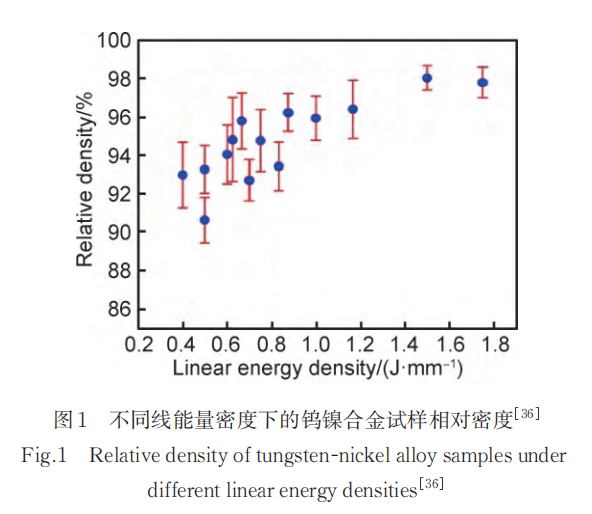
In SLM manufacturing, the final properties of the formed part are influenced by multiple process parameters including laser power, scanning speed, powder layer thickness, and scan spacing. Researchers worldwide typically use the input energy density, which integrates these parameters, to quantify the energy input during part fabrication [35]. Input energy density is primarily categorized into three types based on laser input: line energy density, surface energy density, and volume energy density. Li Junfeng et al. [36] investigated the effects of varying line energy densities on the relative density, microstructure, and microhardness of 93W-7Ni alloy during additive manufacturing. Figure 1 shows the relative densities of tungsten-nickel alloy specimens under different line energy densities. Experimental results indicate that increasing the line energy density effectively reduces irregular porosity defects in the alloy. At a line energy density of 1.5 J/mm, the relative density of the alloy specimen reached 98.04%. Beyond tungsten-nickel alloys, SLM technology has also demonstrated promising performance in fabricating high-performance tungsten-nickel-copper and tungsten-nickel-iron alloys. Yan et al. [37] optimized SLM process parameters including laser power, scanning speed, powder layer thickness, and scan spacing to produce an 80W-5Ni-15Cu alloy with 94.5% density. Microstructural analysis revealed bridging and agglomeration of W phases within the CuNi matrix, forming a grid-like microstructure. Additionally, Li et al. [38] explored the feasibility of producing 90W-7Ni-3Fe alloy using SLM technology. By designing different combinations of forming process parameters, they obtained samples with a density ≥99%. The alloy components exhibited high tensile strength (1121 MPa) but poor ductility (<1%). Microstructural observations revealed that the primary phases in the 90W-7Ni-3Fe alloy were W and γ (Ni-Fe binder phase), with partial dissolution of W within the latter.
In summary, SLM technology has demonstrated the feasibility of producing tungsten alloys with a mass fraction of 90% or higher. When low-melting-point elements such as Ni, Fe, and Cu are used as binder phase elements, the significant difference in melting points between W and these binder phase elements high input energy densities often cause evaporation of the binder phase elements, leading to defects such as cracks and voids. Consequently, the formed parts typically exhibit high tensile strength but generally poor plasticity, imposing significant limitations in engineering applications. The next research focus will be on selecting appropriate process parameters or adding strengthening and toughening elements to the alloy to further enhance plasticity while maintaining tensile properties.
1.2 Laser Melting Deposition of Tungsten Alloys
The LMD process utilizes a high-power laser beam to melt metal powder, sequentially building complex three-dimensional parts layer by layer. During LMD, the laser beam serves as the heat source, scanning along a predetermined path, while powder is delivered through a nozzle into the molten pool created at the laser focus. Powder particles are rapidly melted and solidified by the laser, accumulating layer by layer to form the solid component.
Li et al. [39] employed the LMD process to fabricate and investigate the microstructure and properties of an 80W-20Fe alloy. The study demonstrated that fully dense specimens could be obtained at an input volumetric energy density of 150 J/mm³. Microstructural analysis revealed iron phases and tungsten phases present in the formed part as tungsten particles and tungsten dendrites. Due to peritectic reactions during non-equilibrium solidification, the intermetallic compound Fe₇W₆ also formed. The formation of Fe₇W₆ and the presence of tungsten dendrites significantly increased the hardness of the prepared tungsten alloy while also leading to increased brittleness.
Wang et al. [40] achieved a density of 99% for the 90W-7Ni-3Fe alloy prepared using LMD technology. Compared with liquid-phase sintered specimens, the LMD samples exhibited significantly higher strength than the reference liquid-phase sintered specimens, with yield strength and tensile strength of (822±30) MPa and (1037±50) MPa, respectively. Compared to conventional liquid-phase sintered specimens (yield strength and tensile strength of (606±4) MPa and (872±14) MPa). However, their ductility was poor, with an elongation of only (3.5±0.7)%, far below the (18±2)% elongation of the liquid-phase sintered specimens. This is attributed to the higher heating and cooling rates in the LMD process, resulting in a finer and relatively uniform microstructure with strong interfacial bonding. This contributes to the higher strength of LMD-treated tungsten alloys. However, the LMD process uses a laser beam as the energy source, similar to SLM, which can easily cause evaporation of low-melting-point elements. This leads to defects such as voids, thereby reducing the plasticity of the formed parts.
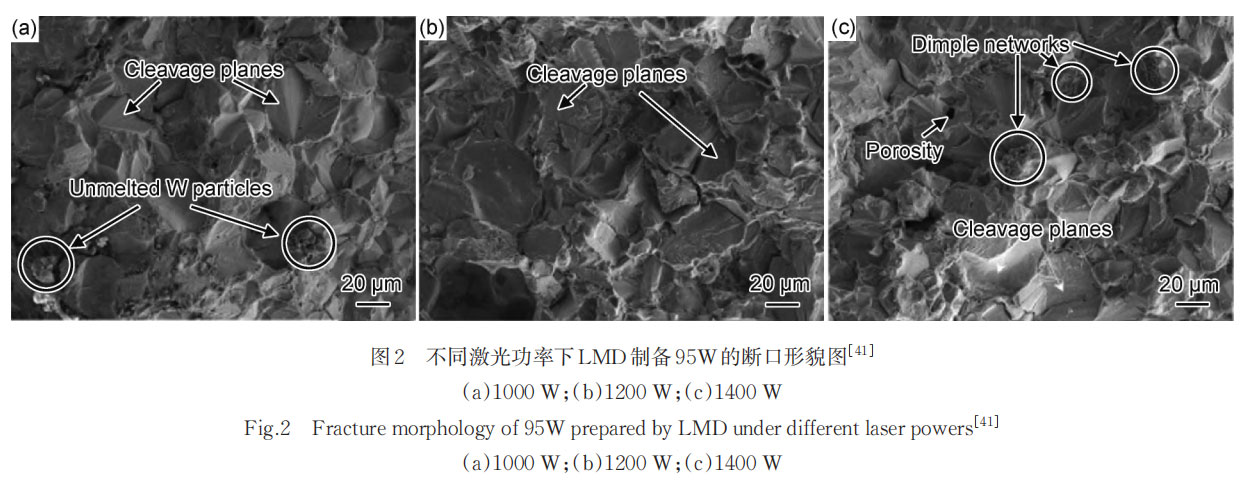
Guo et al. [41] successfully fabricated 95W-3.5Ni-1.5Fe alloy using LMD and investigated the effect of laser power on melt pool formation and mechanical properties. Results indicated that relatively high laser power promotes complete melting of tungsten powder and regular melt pool morphology. They examined the microstructure and mechanical properties of specimens at 1000, 1200, 1400 W laser powers. At 1000 W, powder incomplete melting resulted in numerous unmelted W particles forming abundant cleavage planes (Figure 2(a)), reducing the formed part's tensile strength and plasticity. At 1200 W laser power, the higher energy density further melted the W particles, creating a better metallurgical bond between the W phase and the binder phase. This improved the tensile strength and elongation of the formed part, though some unmelted W particles remained, resulting in a brittle fracture mode, as shown in Figure 2(b). At 1400 W laser power, all unmelted W particles were eliminated, as shown in Figure 2(c). Although some internal pores remained, the formation of a network of ductile dimples and the superior fusion effect due to the higher energy density resulted in significantly improved density and mechanical properties. The measured tensile strength reached 541 MPa, but the elongation was only 0.99%.
Currently, LMD technology can achieve tungsten alloy densities ≥99%. Compared to traditional processes like liquid phase sintering, the fabricated components exhibit significantly enhanced strength but often lower plasticity, with fracture modes typically exhibiting brittle fracture. Future development in LMD-fabricated tungsten alloys will focus on optimizing processes or improving post-processing techniques to enhance material mechanical properties.
1.3 Electron Beam Selective Melting of Tungsten Alloys
Electron Beam Selective Melting (EBSM) is an additive manufacturing process that employs a focused high-energy electron beam to selectively melt a metal powder bed layer by layer in a high-vacuum environment. Similar to Selective Laser Melting (SLM), its core principle involves rapidly heating powder above its melting point with the electron beam, followed by rapid cooling and solidification to form a solid layer. This process is repeated layer by layer to build the desired three-dimensional metal component. Due to the electron beam's high energy density and extremely rapid heating/cooling rates, EBSM is particularly suited for fabricating high-melting-point, difficult-to-process metals such as tungsten alloys. This method is also effective for forming small-sized, complex-geometry components.
Yang Pengwei [42] investigated the process window for producing pure tungsten using EBSM technology. Employing irregularly shaped pure tungsten powder, he adjusted process parameters including scanning speed, melting current, layer thickness, line spacing, and scanning mode. The study revealed that increasing the melting current and reducing the scanning speed effectively improved the density of the formed parts. Under identical process conditions, serpentine scanning yielded superior forming quality. Using the optimized process, a pure tungsten part with a density of 99.5% was successfully produced. The part exhibited a compressive strength of 1600 MPa and a microhardness exceeding 500 HV, but its plasticity was poor.
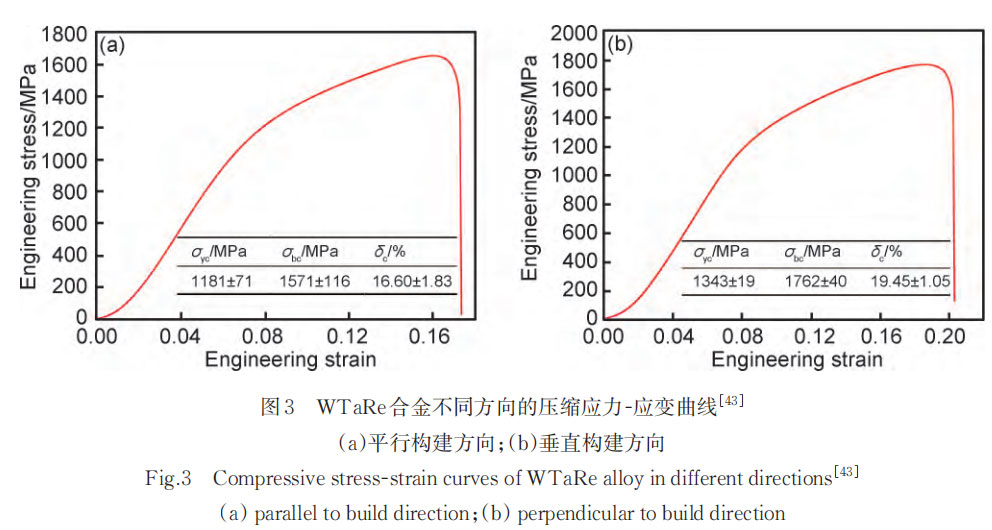
In addition to preparing EBSM from pure tungsten, Xiao et al. [43] also investigated the preparation of WTaRe alloys with mass fractions of W, Ta, and Re at 68%, 14.8%, and 17.2%, respectively. The addition of Ta and Re refined the grain structure and lowered the ductile-to-brittle transition temperature of W, effectively reducing defects such as cracking and porosity during the printing process of tungsten-based alloys. This resulted in fabricated components exhibiting high strength and high ductility. Compressive stress-strain data were tested for components printed both parallel and perpendicular to the build direction, yielding the compressive stress-strain curves shown in Figure 3.
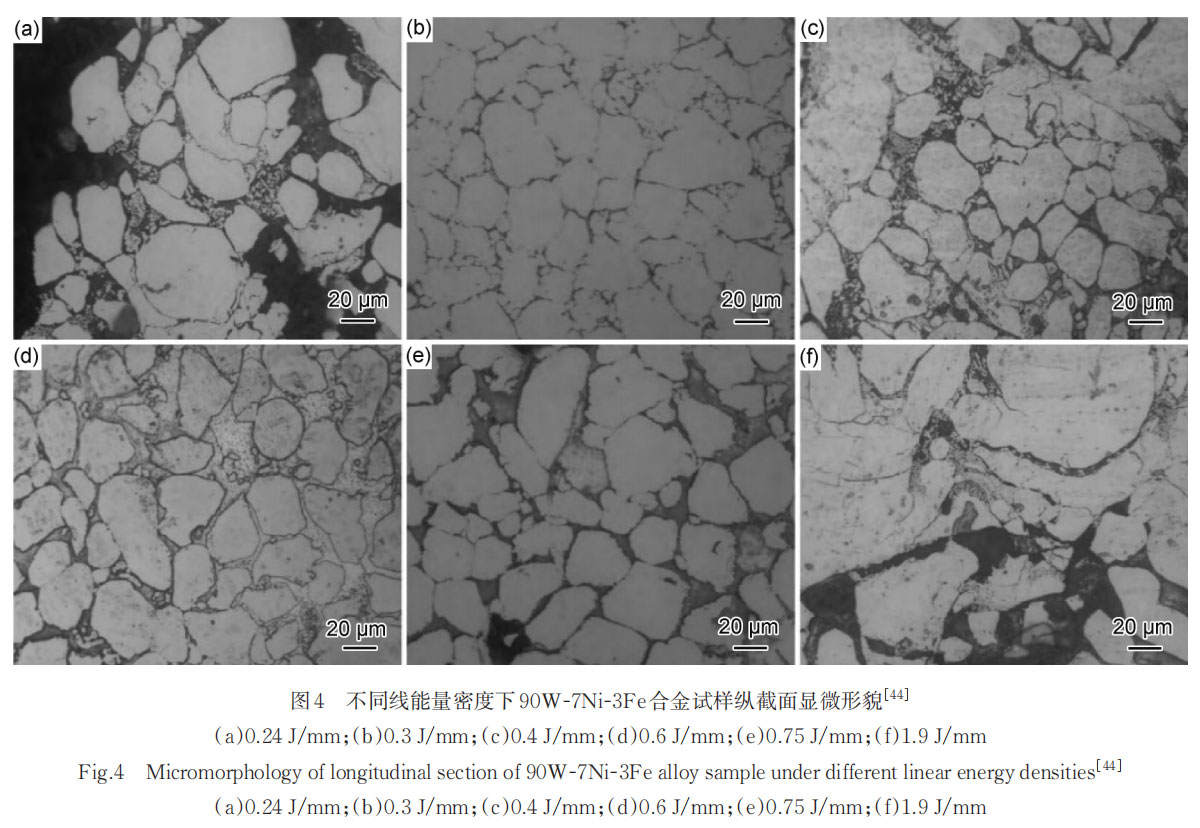
Yang Guangyu et al. [44] employed EBSM technology to fabricate a 90W-7Ni-3Fe alloy, investigating the effects of varying line energy density on the alloy's microstructure and densification process. Findings revealed that at lower line energy densities, the formed parts exhibited poor density with noticeable porosity on the sample surface, as shown in Figure 4(a). As the line energy density increased, the densification of the formed samples enhanced, the content of the binder phase in the alloy rose, and W dissolution-precipitation within the Ni-Fe binder phase began to occur, leading to increased W content within the binder phase, as shown in Figures 4(b) to (e); Further increasing the energy density, as shown in Figure 4(f), resulted in partial melting of W particles and evaporation of Ni and Fe elements. This led to distinct connections between W particles and a reduction in the Ni-Fe binder phase content, causing overburning. Consequently, the mechanical properties of the formed part deteriorated.
Compared to SLM, EBSM operates under distinct conditions, such as a vacuum environment and higher powder bed temperatures. The vacuum effectively minimizes oxidation during forming, while elevated powder bed temperatures reduce thermal stress and temperature gradients during cooling. This helps mitigate defects like voids and cracks, enhancing the mechanical properties of the formed parts [45]. However, relative to SLM technology, printing speeds are often slower, and powder recovery during printing remains challenging.
1.4 Binder Jetting Printing of Tungsten Alloys
BJP technology combines layer-by-layer powder deposition with binder jetting to construct parts with complex geometries. The specific process involves: first, depositing a layer of fine powder onto the printing platform; then, using precisely controlled nozzles to spray a specific binder formulation along predetermined paths, causing powder particles to bond in designated areas and form a solid layer. Subsequently, the printing platform descends by one layer thickness, and the process is repeated until the entire part is built layer by layer. After printing, heat treatment or infiltration with other materials is typically employed to enhance the mechanical properties of the printed part, ultimately yielding components with high density, precision, and performance meeting design requirements.
The process parameters of BJP technology differ from those of the aforementioned additive manufacturing techniques. Key variables influencing the quality of formed parts include binder properties, layer thickness, volume fraction, saturation (ratio of binder volume to pore volume in the powder bed per layer), drying time, and post-processing methods [46]. Enneti et al. [47] investigated the effects of binder saturation and powder layer thickness on the strength of BJP-printed WC-12%Co powder. They found that for any given powder layer thickness, sample strength increased with rising binder saturation. Notably, at powder layer thicknesses of 50 μm and 60 μm, samples with 60% and 75% saturation exhibited comparable strength. However, as the powder layer thickness increased to 70 μm, the strength of the samples decreased. The study indicated that increasing binder saturation was more beneficial than increasing binder setting time in reducing the strength difference between printed samples with powder layer thicknesses of 60 and 70 μm.
Stawovya et al. [48] employed BJP technology with a layer thickness of 100 μm, binder saturation ranging from 60% to 100%, with drying and spreading speeds of 10 mm/s. They successfully printed 91 W tensile specimens. After printing, the specimens underwent dewaxing in a reducing atmosphere at 870°C and were sintered for 2 hours within the 1365–1385°C range. The sintered specimens exhibited near-complete binder removal. The average density of the three final specimens reached 17.24 g/cm³, approaching the theoretical density of 17.25 g/cm³. The tensile strength was 770 MPa with an elongation of 8.6%. While the strength was slightly lower compared to other additive manufacturing processes, plasticity showed significant improvement.
Compared to SLM, LMD, and EBSM, BJP technology does not require complete melting of alloy powders or the use of high-energy heat sources, resulting in lower costs. In tungsten alloy fabrication, it effectively reduces the evaporation of low-melting-point binder phase elements such as Ni, Fe, and Cu, significantly improving the plasticity of formed parts compared to other processes. However, post-processing steps like debinding and sintering are often required after printing. resulting in a longer overall preparation process and lower efficiency. Post-processing frequently introduces porosity in components, adversely affecting mechanical properties and leading to lower strength.
1.5 Powder Extrusion Printing of Tungsten Alloys
Powder extrusion printing (PEP) constructs three-dimensional objects by extruding a mixture of powder and binder. During printing, powder material is blended with a thermoplastic binder, heated, and then extruded through one or more nozzles, depositing layer by layer onto a build platform. The extruded material cools and solidifies upon deposition, progressively forming complex geometries layer by layer. Subsequently, the built component undergoes debinding and sintering steps to remove the binder and sinter the powder particles together, ultimately yielding a part with the desired mechanical properties and density.
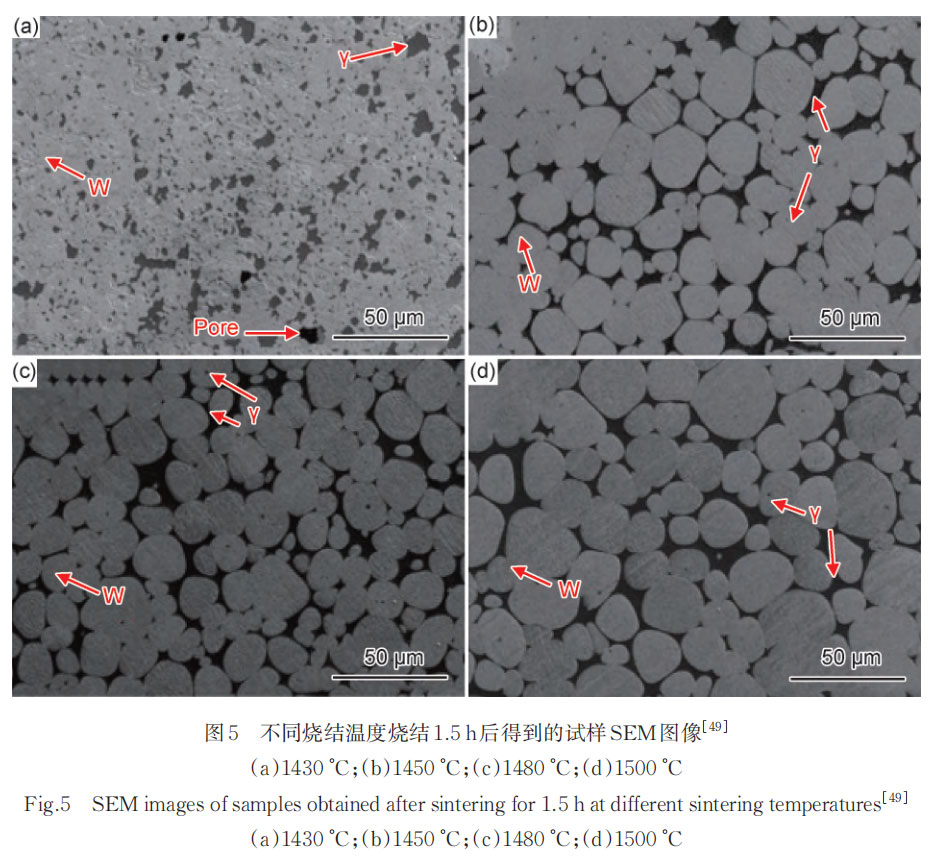
Hu et al. [49] employed PEP technology to fabricate 93W-4.6Ni-2.4Fe alloy and investigated the effects of post-sintering treatment temperature on its microstructure and mechanical properties. Surface morphologies at various sintering temperatures are shown in Figure 5. Experiments demonstrated that specimen density increased with rising sintering temperature, reaching over 99.5%. At 1430 °C, the 93W-4.6Ni-2.4Fe specimen exhibited brittle fracture characteristics, with SEM observation revealing distinct pores on the surface. However, within the sintering temperature range of 1450–1480 °C, a transition from brittle to ductile fracture occurred. The W phase was uniformly surrounded by the γ phase with virtually no voids. At 1500 °C, W particles grew further, and the specimen surface morphology showed increased contact between W particles while the contact area between the W phase and γ phase decreased, weakening the strengthening effect on the relative mechanical properties. The optimal sintering temperature for the 93W-4.6Ni-2.4Fe specimen was determined to be 1480 °C, yielding a tensile strength of (1040±6) MPa and an elongation of (20.7±0.4)%. The high ductility of this specimen can be attributed to the high-density, uniformly distributed ductile voids within the network γ phase and the bridging effect of γ relative to cracks. The high strength is associated with the specimen's high density and the moderate solid solution strengthening effect of the tungsten particle size.
In addition to the 93W-4.6Ni-2.4Fe alloy, Hu et al. [34] also successfully fabricated components from the 96W-2.7Ni-1.3Fe alloy. Research indicates that by optimizing the binder removal process and employing two-step sintering in a hydrogen atmosphere, alloy components with approximately 99.1% density can be achieved, exhibiting a strength of 801 MPa and an elongation of 22.1%. Appropriate heat treatment further enhances these properties, achieving tensile strength and elongation of 838 MPa and 26.1%, respectively. Experimental results indicate that sintering under hydrogen atmosphere promotes increased powder surface energy and sintering activity, strengthened bonding at W-γ interfaces, and the formation of crack bridging mechanisms.
Similar to BJP technology, PEP technology, compared to laser forming methods, does not require the use of high-energy heat sources like lasers to fully melt metal powders during forming. It consumes less energy, significantly reducing manufacturing costs. The properties of printed products can reach the level of liquid-phase sintering and forgings. However, this technology has a relatively short development history, and research on process routes for some materials is still lacking. Additionally, the necessity for debinding and post-processing steps results in lower manufacturing efficiency, imposing certain limitations on its application.
2 Comparative Analysis of Tungsten Alloy Additive Manufacturing Technologies
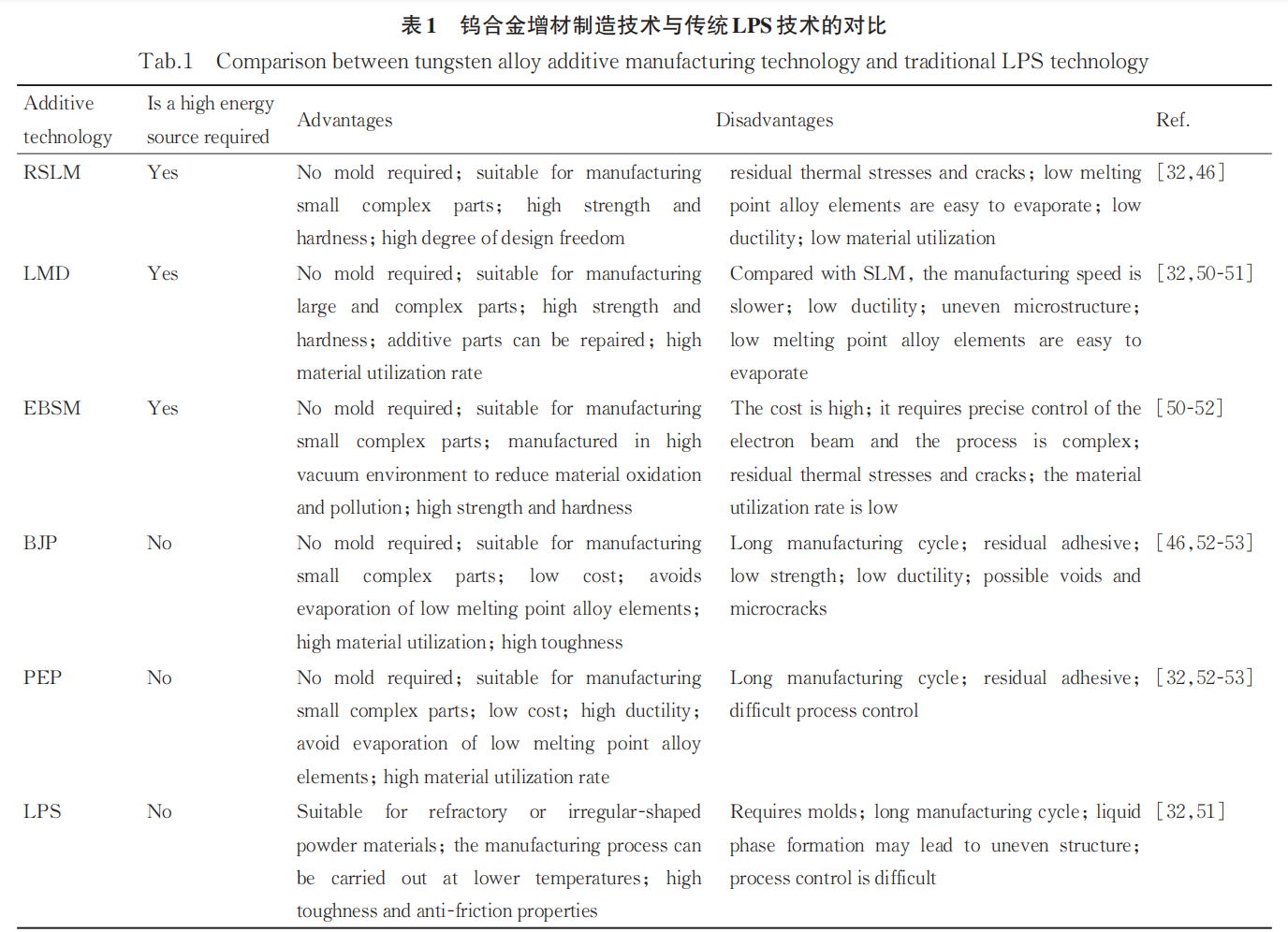
A comprehensive comparison of the characteristics and advantages/disadvantages of the aforementioned five tungsten alloy additive manufacturing processes is summarized in Table 1 [32, 46, 50-53].
The aforementioned five additive manufacturing technologies can be further categorized into two major types based on material forming mechanisms: cold-forming and hot-forming additive manufacturing techniques. Among these, SLM, LMD, and EBSM utilize heat to fully melt or sinter materials during forming, falling under hot-forming additive manufacturing. BJP and PEP technologies, however, do not require complete melting of the material. Instead, they employ non-thermal methods such as mechanical compression using a binder to form the material components. These techniques utilize line scanning during the forming process, which offers faster forming speeds compared to the point scanning method of thermal forming additive technologies, thus falling under cold forming additive manufacturing. For thermal forming additive technologies, complete material melting is required during forming. Melted powders must exhibit good flowability to achieve precise layer-by-layer deposition. Consequently, these technologies impose higher demands on raw material powder properties, such as particle shape, particle size, and particle size distribution.
Common particle shapes for powder materials include spherical, near-spherical, acicular, flake-like, and other irregular forms. Irregular particles often possess larger surface areas, enhancing sintering drive. Powder particles with higher sphericity exhibit superior flowability, enabling more uniform powder feeding and spreading. Hot-forming additive technologies typically demand higher sphericity to facilitate stable melting processes, thereby improving the density and uniformity of formed parts. In contrast, cold-forming additive technologies operate independently of powder flowability and do not require complete material melting. They impose lower demands on powder flowability and bulk density. Consequently, cold-forming techniques do not necessitate extremely high sphericity, allowing for cost reduction through the use of powders with slightly lower sphericity.
Generally, finer metal powder particles exhibit larger specific surface areas, generating stronger sintering forces and thus facilitating sintering. Additionally, smaller particle sizes enable tighter bonding between successive powder layers and higher bulk densities, improving the density of the formed parts. However, excessively fine particles tend to agglomerate and form clumps, leading to spheroidization during forming. This reduces powder flowability, prevents the formation of a continuous, smooth melt pool, and compromises part quality. For hot forming techniques, powders that are either too coarse or too fine can adversely affect melt pool stability and interlayer bonding strength. A narrow particle size distribution facilitates uniform powder spreading and melting. Therefore, it is necessary to select powder materials with moderate particle size and a relatively concentrated particle size distribution. Typically, SLM technology is most suitable for powder particle sizes between 15 and 53 μm. LMD technology permits a relatively broader powder size range, though materials between 53–150 μm are typically used. EBSM technology employs an electron beam as its energy source, featuring high energy conversion efficiency. Compared to SLM, it can utilize powders with larger particle sizes, with 53–150 μm being a suitable range [54]. For BJP and PEP technologies, the required powder characteristics primarily involve compressibility and cohesiveness. Powder size requirements are less stringent, and a broader particle size distribution does not significantly impact forming quality.
In recent years, SLM, LMD, EBSM, BJP, and PEP technologies have all achieved the fabrication of tungsten alloys with mass fractions of 90% or higher. After process optimization, the density of the fabricated parts can reach over 99%. SLM, LMD, and EBSM—which utilize laser and electron beams as energy sources—produce tungsten alloy components with high strength exceeding that of traditional LPS-fabricated parts. However, these methods often exhibit defects such as cracking and exhibit lower plasticity. BJP and PEP technologies bond powder materials using binders, featuring low energy consumption and forming temperatures. This reduces defects like cracking caused by excessive thermal gradients, offering relatively good plasticity with slightly reduced strength. However, manufactured parts require binder removal and post-processing to enhance mechanical properties, resulting in longer manufacturing cycles. PEP technology is a relatively newer approach that balances high plasticity and strength. However, due to its shorter development period, controlling the mechanical properties of formed parts remains challenging, limiting its current applications.
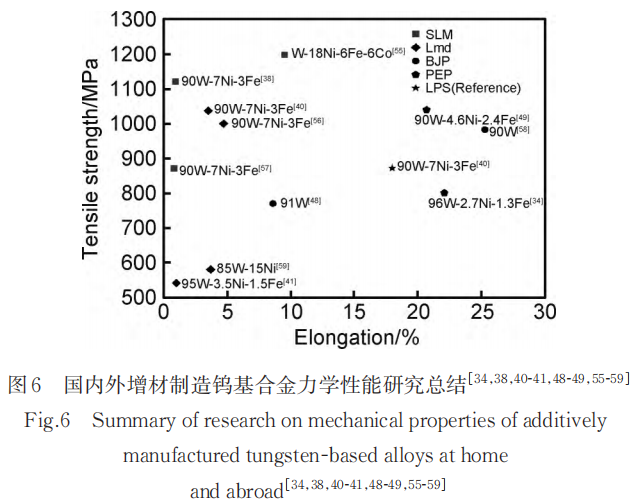
As shown in Figure 6, integrating research progress across various technologies in the field of forming tungsten alloys, this study summarizes the elongation and tensile strength of formed tungsten alloy components prepared by relevant scholars domestically and internationally [34, 38, 40-41, 48-49, 55–59]. The figure indicates that current research on additive manufacturing of tungsten alloys primarily focuses on the 90W-7Ni-3Fe composition. Components fabricated using additive manufacturing techniques generally exhibit higher strength than those produced via conventional LPS methods, but often demonstrate lower plasticity. Specifically, the elongation of SLM- and LMD-produced 90W-7Ni-3Fe components generally falls below 7%. However, alloying with cobalt significantly enhances both strength and plasticity in SLM-produced parts, achieving tensile strengths up to 1198 MPa and elongation reaching 9.5%. Additionally, tungsten alloys produced via EBSM technology generally exhibit poor plasticity. Domestic and international researchers have primarily focused on their density and microhardness, resulting in limited reports on specific tensile strength and plasticity metrics. Further process optimization or material improvements are needed to enhance plasticity. Although BJP and PEP can produce parts with higher plasticity than traditional LPS, process control remains challenging, and product consistency requires further improvement.
3 Factors Influencing the Strength and Toughness of Additively Manufactured Tungsten Alloy Parts
Due to tungsten's inherent properties—high melting point, high brittleness, high density, and high viscosity—spheroidization of tungsten often occurs during additive manufacturing, leading to defects such as cracking and porosity in the parts [50, 60]. Therefore, strengthening treatments are necessary for additive-manufactured tungsten materials. These strengthening methods include, leading to defects such as cracking and porosity in the formed parts [50, 60]. Therefore, strengthening treatments are required for additively manufactured tungsten materials. These strengthening methods can be categorized into two types based on their mechanisms [32, 44, 61-67]: First, dispersion strengthening is achieved by incorporating hard particles into homogeneous materials. These dispersed hard particles impede dislocation motion, thereby enhancing material strength. Additionally, dispersion strengthening refines grain size and increases the total number of grain boundaries, reducing the average impurity element content at grain boundaries and improving material toughness. Second, alloying tungsten with elements such as Ni, Fe, Cu, Co, Cr, Mo, and Mn to achieve solid solution strengthening or grain boundary strengthening, thereby improving the mechanical properties of formed components.
3.1 Influence of Second-Phase Particles on the Microstructure and Properties of Tungsten Alloy Formed Components
Dispersion strengthening of tungsten alloys typically requires introducing second-phase particles into the matrix during the powder production stage. Currently, dispersion-strengthening particles are primarily categorized into metallic carbide particles and rare earth oxide particles [68]. Cunningham et al. [69] employed SLM technology to introduce ZrC into tungsten materials for grain refinement and NiFe as a binder phase, preparing and investigating the microstructures of W, W+0.5ZrC, W-3.5Ni-1.5Fe, and W-3.5Ni-1.5Fe-0.5ZrC specimens. Results indicate that compared to pure W, the W alloy exhibits more pores. Alloying reduces cracking at the cost of increased porosity. Compared to W-3.5Ni-1.5Fe, the W-3.5Ni-1.5Fe-0.5ZrC specimen with added ZrC second-phase particles shows fewer pores. The combination of NiFe alloy strengthening phases and ZrC particles jointly mitigated cracking while reducing porosity. Furthermore, comparing W, W+0.5ZrC, W-3.5Ni-1.5Fe, and W-3.5Ni-1.5Fe-0.5ZrC, the specimens with ZrC particles exhibit significantly refined grain structure and markedly enhanced crack resistance. Besides introducing metal carbides as dispersion-strengthening particles, incorporating rare earth oxide particles can also effectively suppress cracking in tungsten. Hu et al. [70] employed the Selective Laser Melting (SLM) process to prepare and compare pure tungsten with oxide dispersion-strengthened tungsten (O DS-W). By optimizing SLM process parameters, they successfully produced pure tungsten with a density of 98.3±0.3%, though microcracks persisted in the formed parts. To further investigate the strengthening mechanism of rare earth oxide particles, electron backscatter diffraction (EBSD) was employed to determine grain size and grain orientation angle differences in the formed parts. Results indicated that the addition of nano- and micron-sized Y₂O₃ particles did not significantly refine tungsten grains. However, Y₂O₃ incorporation reduced cracking by forming numerous low-angle distorted tungsten grains.
Beyond ZrC and Y₂O₃, incorporating TiC [71] and La₂O₃ [72] particles into tungsten materials during forming also effectively reduced crack generation and improved mechanical properties. The strengthening effect of metal carbides primarily stems from strong interface interactions between the carbide particles and the matrix metal. These interfaces efficiently transmit stress and impede dislocation movement, thereby enhancing material strength and hardness. Furthermore, metal carbide particles serve as heterogeneous nucleation sites, promoting the formation of fine grains and consequently improving mechanical properties. The strengthening effect of rare earth oxide particles on materials is primarily achieved by forming a stable oxide network within the matrix. These oxide particles suppress dislocation movement and crack propagation. Furthermore, rare earth oxide particles typically distribute along grain boundaries, purifying them and inhibiting grain boundary slip, thereby enhancing material strength.
3.2 Effects of Alloying on Microstructure and Properties of Formed Tungsten Alloys
Alloying is another common method for strengthening and toughening formed tungsten alloys, achieved by adding other alloying elements to improve properties. These elements enhance the mechanical properties of formed tungsten alloy components through multiple mechanisms. Currently, the two primary categories of high-density tungsten alloys are W-Ni-Fe and W-Ni-Cu. The addition of Ni effectively lowers the sintering temperature of W, creating a process similar to activation sintering in powder metallurgy during the additive manufacturing of tungsten alloys. simultaneously preventing excessive grain growth during sintering. However, Ni readily forms the brittle WNi₄ phase with W. Adding Fe and Cu reduces W's solubility in Ni, thereby suppressing WNi₄ phase formation and improving mechanical properties [8,73]. Yet, at high W concentrations, defects like cracks still readily develop during additive manufacturing. To address this issue, researchers worldwide have effectively suppressed defect propagation by further incorporating elements such as Cr [74], Co [62], and Mo [75] into the alloy. This approach has successfully yielded tungsten alloy components with higher density and superior mechanical properties.
Chen et al. [55] utilized SLM technology to fabricate W-6Ni-2Fe-2Co (W90), W-12Ni-4Fe-4Co (W80), and W-18Ni-6Fe-6Co (W70) composites using SLM technology. They investigated the effects of laser process parameters and chemical composition on densification, microstructure, phases, and tensile properties. Experimental results indicate that increasing laser energy density enhances the density of the composites. Notably, the W70 composite achieved near-complete densification with no cracks or voids, exhibiting significantly improved tensile properties. The maximum tensile strength reached 1198 MPa with an elongation of 9.5%, demonstrating substantially enhanced plasticity compared to SLM-produced W-Ni-Fe alloys. Xue et al. [76] investigated the additive manufacturing process of niobium-alloyed tungsten (W-5Nb) using SLM technology. The addition of Nb formed a W-Nb solid solution phase, effectively enhancing intergranular bonding strength and suppressing microcrack formation. At an energy density of 397 J/mm³, they successfully fabricated W-5Nb specimens with a relative density of 98%. Alloying treatment demonstrates significant potential in additive manufacturing of tungsten alloys, offering broader prospects for reducing defects in formed parts and improving mechanical properties.
4 Conclusion
Currently, additive manufacturing of tungsten alloys primarily employs laser energy for material melting and forming, enabling near-net-shape fabrication of complex components. However, challenges persist in the additive manufacturing process, such as insufficient density of formed parts, microstructural inhomogeneity, and susceptibility to surface cracking, which limit the enhancement of final product performance. To optimize the additive manufacturing process for tungsten alloys, it is essential to conduct in-depth investigations into various forming techniques and implement precise process monitoring. This will improve the quality of formed parts and ultimately promote the deeper industrial application of tungsten alloys. In comparison, the Powder-Electrochemical Processing (PEP) technology, which combines powder metallurgy with 3D printing, offers significant advantages in producing high-ductility, high-strength, and complex-shaped tungsten alloy components. It effectively avoids defects like cracking in specimens, making it an ideal forming method. However, its process exploration remains immature, presenting challenges in regulating the properties of formed parts. Concurrently, Selective Laser Melting (SLM), as the mainstream additive manufacturing technology for tungsten alloy components, holds immense potential for enhancing mechanical properties through secondary phase strengthening and alloying treatments.
Additive manufacturing technologies offer extensive research and application opportunities for tungsten alloy production. This paper posits that additive manufacturing of tungsten alloys will demonstrate superior performance in the following aspects:
(1) Composition Optimization: As demand for tungsten alloys grows in high-temperature and corrosive environments within aerospace, energy, and chemical industries, optimizing their composition and microstructure will be a key focus for future research. Refining alloy element ratios and introducing new alloying elements can further enhance mechanical properties and melting characteristics, yielding components with superior mechanical performance.
(2) Process Parameter Control: Precise control of additive manufacturing process parameters is essential for improving the quality of tungsten alloy components. Future research should focus on optimizing parameters such as laser power, scanning speed, layer thickness, and scanning strategies to reduce cracks, voids, and other defects, thereby enhancing the density and consistency of printed parts.
(3) Post-Processing Techniques: Post-processing methods like heat treatment, surface finishing, and machining are vital for improving the overall performance of additive-manufactured tungsten alloy parts. Further exploration is needed in refining heat treatment processes to eliminate residual stresses and developing novel surface modification techniques to enhance surface quality and wear resistance.
(4) Multi-material printing technology: Advances in multi-material printing enable the composite printing of tungsten alloys with other metals or ceramics to produce complex components featuring specific functional gradients or enhanced interfacial properties.
(5) Smart manufacturing integration: Combining additive manufacturing with artificial intelligence and machine learning enables real-time monitoring and adaptive control of the manufacturing process. Predictive models and feedback loops allow automatic parameter adjustments during printing to ensure part quality.
References: Lu Jilie, Liu Anjin, Liu Kun, et al. Research Progress on Additive Manufacturing of Tungsten Alloys and Their Strengthening and Toughening [J]. Materials Engineering, 2026, 54(1): 90-102.
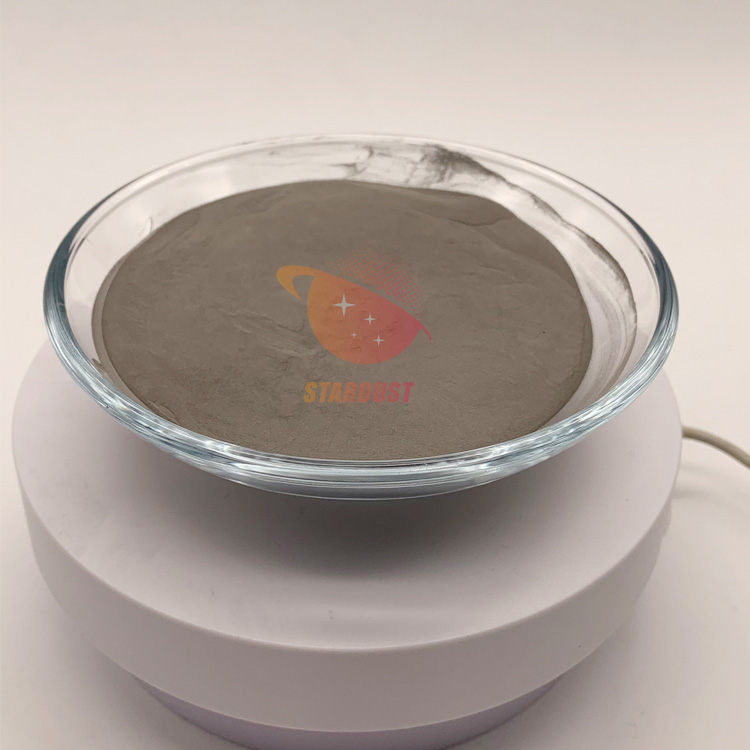
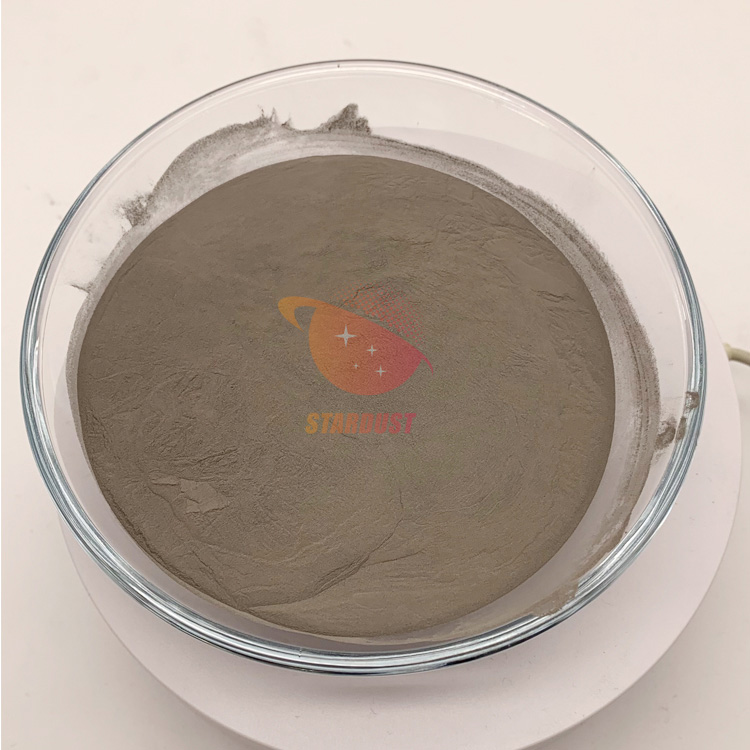
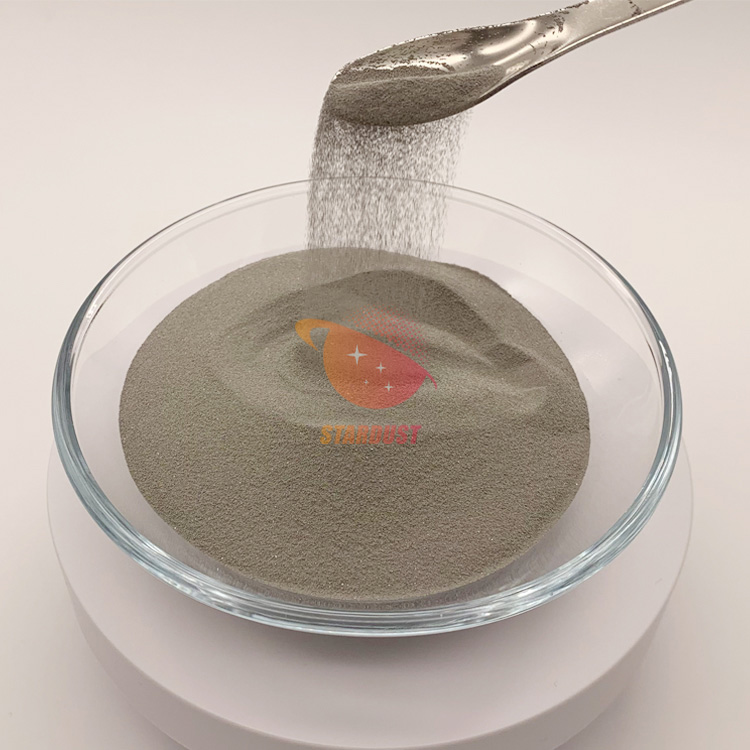
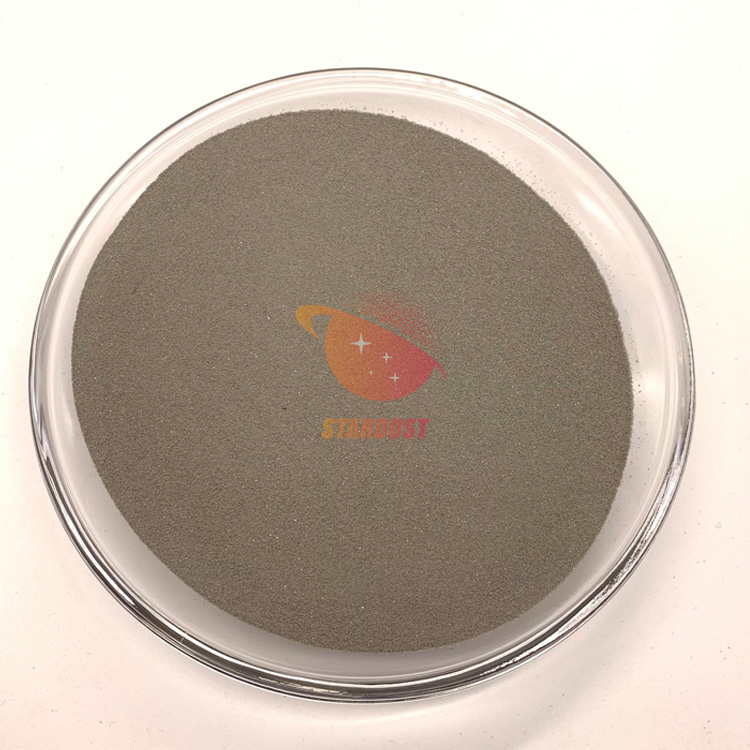
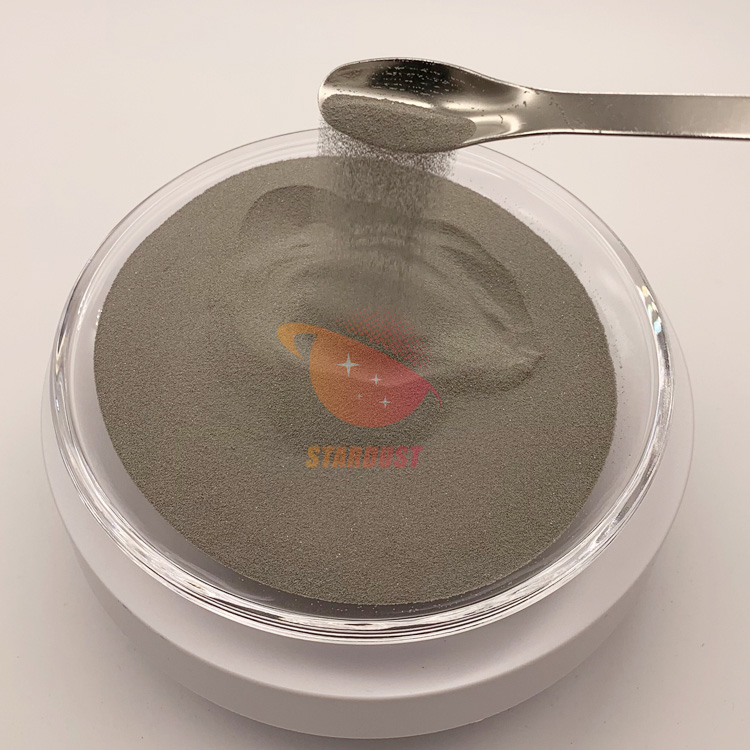
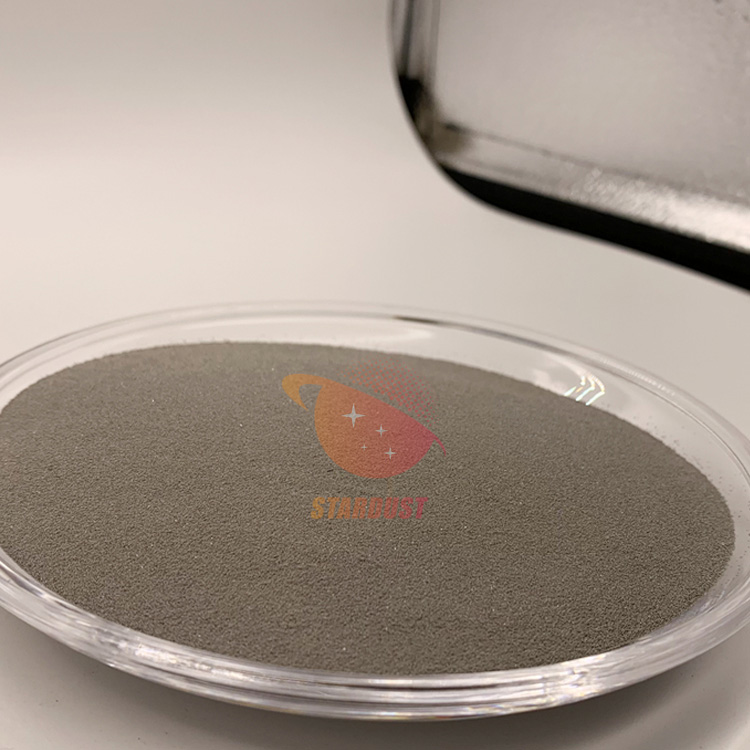
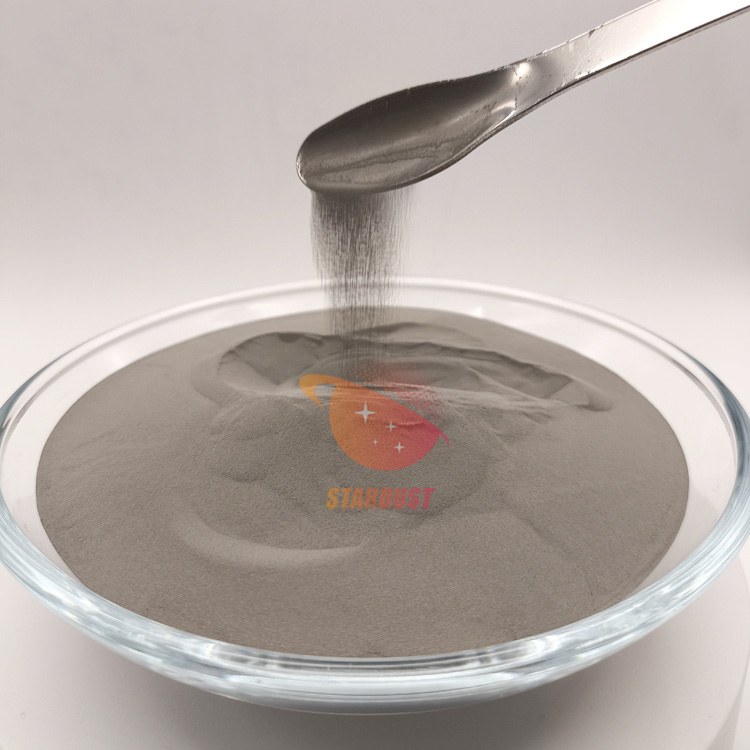
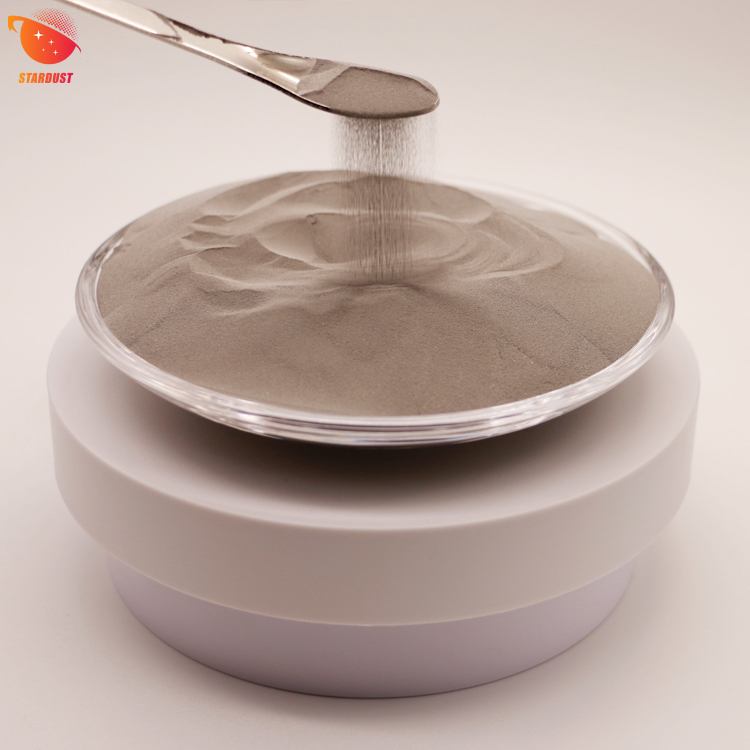
Stardust Technology's spherical tungsten-nickel-iron alloy powder utilizes high-purity tungsten as the matrix. Nickel and iron are precisely proportioned as binding phases, and the powder is produced via radiofrequency plasma spheroidization. Through precise batching, high-temperature RF plasma spheroidization, isostatic pressing, and high-temperature liquid-phase sintering, the process leverages the RF plasma's electrode-free, high-temperature, and high-efficiency characteristics to achieve dense bonding between tungsten particles and the nickel-iron phase. This results in products with high sphericity, uniform particle size, excellent flowability, low oxygen content, and reliable batch-to-batch consistency, suitable for various forming processes such as compression molding and injection molding. This spherical alloy powder exhibits a density range of 17.0–18.5 g/cm³ and a tensile strength of 700–1200 MPa, combining excellent strength with plasticity. It features a low thermal expansion coefficient, outstanding dimensional stability, and effective shielding capability against X/γ rays. Additionally, it possesses machinability for turning, milling, grinding, and forging. medical radiation shielding, automotive turbine counterweights, military inertial components, and 3D printing. Leveraging stable production processes and stringent quality control, Stardust Technology provides customers across industries with spherical tungsten-nickel-iron alloy powder products tailored to practical requirements, along with comprehensive technical support. For further product details and quality inspection reports, please contact manager Cathie Zheng at +86 13318326187 (WeChat and WhatsApp).



 IPv6 network supported