Ti-6Al-4V (TC4), a stable (α+β) duplex titanium alloy [1], has gained extensive application in aerospace and biomedical fields [4] due to its excellent corrosion resistance and biocompatibility [2-3]. However, inherent limitations such as low hardness, poor wear resistance, and insufficient thermal conductivity [5-7] severely restrict its engineering applications. Particularly under complex operating conditions, material systems must simultaneously satisfy the synergistic demands of high hardness, high strength, and superior wear resistance—posing significant challenges to conventional titanium alloys. Surface engineering techniques are commonly employed to enhance titanium alloys [8]. Laser cladding technology, leveraging its high energy density, ultra-rapid cooling rates, and metallurgical bonding characteristics [9-10], produces coatings with superior substrate adhesion, minimal heat-affected zones, uniform microstructure, fine grain size, and controllable thickness [11]. This technology reduces costs and enhances efficiency, finding extensive application in petrochemical, aerospace, and shipbuilding industries [12], establishing itself as an effective method for surface strengthening of titanium alloys.
Refractory High-Entropy Alloys (RHEAs) are designed with near-equimolar ratios of multiple refractory metals (e.g., Mo, Nb, Ta, W). Leveraging high-entropy effects and lattice distortion, they form simple phase structures dominated by body-centered cubic (BCC) solid solutions [13]. The random, disordered distribution of high-melting-point elements within the solid solution endows RHEAs with unique superior properties, including high hardness, high strength, high wear resistance, high-temperature oxidation resistance, and thermal stability [14-18]. Recent studies indicate that introducing low-melting-point or solid-solution strengthening elements can further optimize the microstructure and performance of RHEA coatings. For instance, Pan et al. [19] utilized electron beam cladding to deposit WCx/CoCrCuFeNi1-x (x=0,0.1,0.2,0.3) composite coatings on 304 stainless steel substrates. As WC content increased, coating cracks decreased while hardness initially rose before declining. Ning Shuang et al. [20] prepared WCx coatings on 45 steel substrates via laser cladding. Their study revealed that appropriate WC addition formed numerous fine hard phase particles, thereby enhancing the hardness and wear resistance of the iron-based alloy cladding layer. Cháo Lǐxiàng et al. [21] investigated the effects of varying Ti content on the microstructure and mechanical properties of Ti_xZrNbMo coatings. They found that Ti effectively suppresses the formation of precipitates and alters the alloy microstructure. Wang Tao et al. [22] added Cr to NbMoZrAlCr alloy, resulting in precipitation of Cr₂(Nb,Zr)-type Laves phases. As Cr content increased, the volume fraction of the second phase rose and dendrites refined. Zhang Wei et al. [23] prepared NbMoTiVSixR HEAs via vacuum arc melting. As Si content increased, the proportion of M5Si3 (M=Nb, Mo, Ti, V) hard phases formed successively rose, leading to enhanced compressive strength and reduced compressive fracture strain in the alloy. However, the influence mechanism of Ti on MoNbTaW-based refractory high-entropy alloy coatings remains unclear. Existing studies predominantly focus on conventional melting processes or single-property analyses, lacking systematic investigations into the correlation between Ti content and coating microstructure/properties during laser cladding.
Therefore, this study prepared MoNbTaWTix (x = 0, 0.25, 0.5, 0.75, 1, molar ratio) R HEAs via laser cladding to systematically investigate the influence of Ti addition on coating microstructure, dilution rate, phase composition, microhardness, and friction properties. By revealing the correlation between Ti content and coating microstructure/performance, this study provides a reference for designing high-performance R HEAs coatings.
1 Experimental Procedure
1.1 Material Preparation
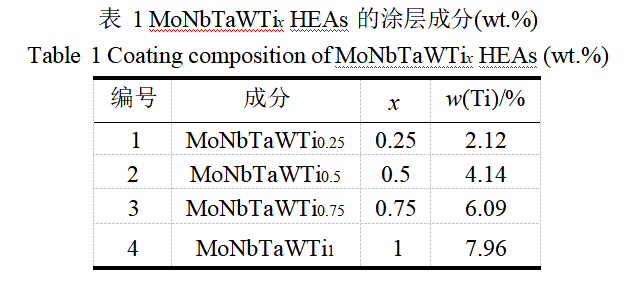
Mo, Nb, Ta, W, and Ti powders supplied by Nangong Lijia Metal Materials Co., Ltd. were used. All powders had a purity exceeding 99.5% (mass fraction) with particle sizes of approximately 43.2, 8.1, 38.5, 37.6, and 25.3 μm, respectively. Table 1 lists the MoNbTaWTix powder ratios. TC4 titanium alloy was selected as the substrate material. The substrate surface was polished using 200–600 grit sandpaper to remove oil films and oxide layers.
1.2 Experimental Procedure
Weigh and mix the powders according to the required proportions, then load them into ball milling jars. Add ZrO₂ grinding balls as mixing media at a ball-to-material ratio of 2:1. Grind using an XQM-8L planetary ball mill for 12 hours at 200 rpm, reversing direction every 30 minutes. After grinding, dry the mixture in a 120°C oven for 4 hours. Figure 1 shows the microstructure and EDS surface scan of the MoNbTaWTi powder after ball milling, revealing uniform mixing. The image also reveals irregularly shaped Mo particles with angular surfaces; spherical Nb particles exhibiting smooth surfaces; irregular Ta particles with surface voids; aggregated square-shaped W particles; and Ti particles predominantly consisting of irregular triangular flakes. The particle size distribution spans a wide range, with larger particles showing distinct polygonal fragmentation characteristics, while smaller particles tend toward equiaxed morphology.
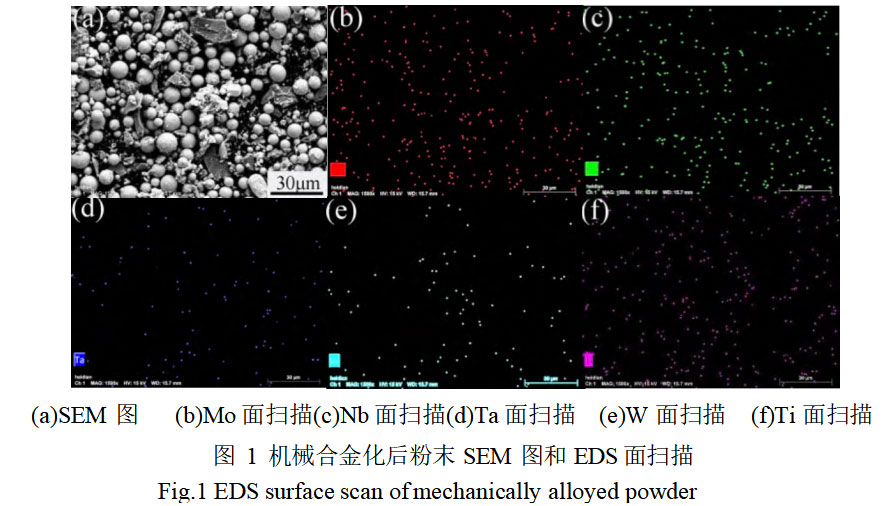
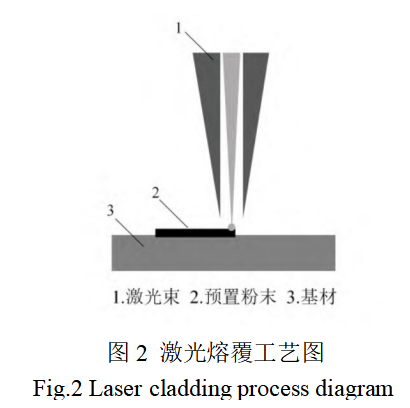
Figure 2 depicts the laser cladding process. Single-pass laser cladding was performed using the pre-spreading method: powder was first uniformly spread onto the substrate surface to form a strip-like layer approximately 1 mm thick. Subsequently, under ambient air conditions, a single-pass cladding was conducted using an IPG 2000W fiber laser system with a spot diameter D of 6.5 mm and a wavelength of 1064 nm. The scanning speed was 6 mm/s, with a laser power of 2700W, to prepare the alloy coating.
A series of 10mm × 10mm × 10mm specimens were obtained via wire cutting. The cross-sections of the specimens were ground and polished without metallographic etching. The coating microstructure and morphology were observed using a Zeiss Sigma-300 scanning electron microscope (SEM). Elemental distribution analysis was performed using Bruker EDS technology (Energy Dispersive Spectroscopy, EDS). Phase analysis of the specimens was conducted with an XRD diffractometer using a copper target at 30kV, with a scanning angle range of 20°–80° and a scanning step size of.
Microhardness testing of the coating was performed using an FM-810 digital Vickers hardness tester with a load of 100 N and a dwell time of 10 s. Tests were conducted at 100 μm intervals from the coating surface to the substrate. The microhardness value was calculated as the average of three measurements at each position. A reciprocating friction and wear test was conducted on the specimens using a CFT-I friction and wear tester. The counter-material was a GCr15 steel ball with a hardness of 60 HRC. Test parameters included a load of 10 N, a rolling radius of 3 mm, a rotational speed of 240 r/min, and a friction test duration of 40 min. The post-friction surface was examined using scanning electron microscopy to analyze the wear mechanism.
2 Experimental Results
2.1 Phase Analysis of Coatings
Figure 3 shows the XRD diffraction pattern of MoNbTaWTix HEAs. It is observed that the phase composition of MoNbTaWTix coatings exhibits a nonlinear variation with increasing Ti content. At x=0, Ti₂N, Ti₂O, and Mo₂C phases formed in the coating. This indicates trace Ti in the substrate may react with ambient N₂ and O₂ to form sub-stoichiometric Ti₂N and Ti₂O, while Mo₂C formation stems from the preferential binding of carbon impurities with Mo during the cladding process. At x = 0.25–0.75, the TiN phase begins to appear and coexists with Ti2N. This can be attributed to the increased added Ti content providing a sufficient Ti source, promoting the direct reaction between Ti and N to form TiN, while residual N elements still participate in the formation of Ti2N. Within this range, the intensity of the TiN diffraction peak increases with rising x, indicating that higher Ti content enhances the stability of the TiN phase. However, at x=1, the TiN phase disappears, leaving only Ti2N, Ti2O, and Mo2C phases. This may occur because the introduction of excess Ti reduces the system's mixed entropy and increases atomic size differences, inducing the preferential precipitation of the metastable Ti2N phase. Research indicates that when the Ti/N atomic ratio exceeds 1.5, the Gibbs free energy of Ti₂N may become lower than that of TiN. It is speculated that the tendency toward Ti₂N formation at x=1 may result from a relatively high Ti/N atomic ratio [24].
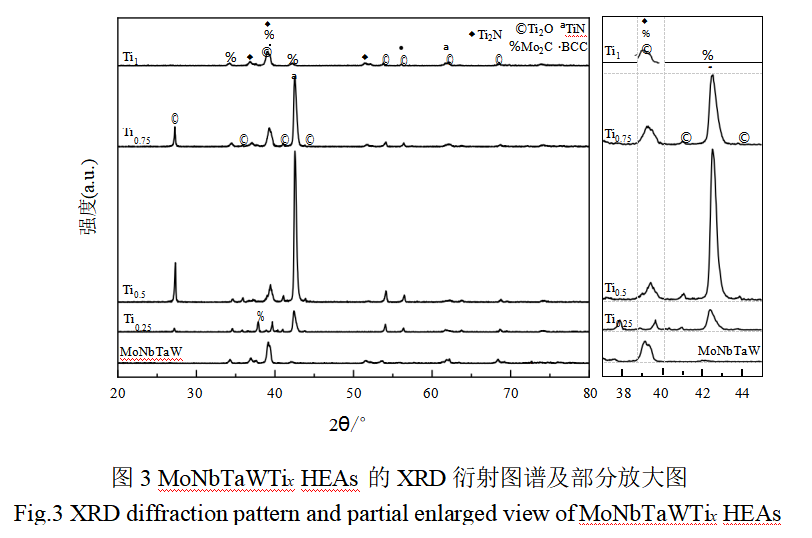
Local XRD diffraction patterns reveal that the peaks of Ti₂N, Ti₂O, and Mo₂C phases exhibit shifts at different Ti contents. The diffraction peak corresponding to Ti₀.₂₅ actually occurs at 39.1°, while that for Ti₀.₅ shifts to 39.3° and Ti₁ to 39.7°. In contrast, the corresponding peak in the PDF card is at 39.9°, indicating a leftward shift. According to Bragg's law [25], this shift results from lattice distortion. In summary, increasing Ti content alters the nitride phase composition of the coating by regulating N element distribution behavior and phase competition thermodynamics. This provides significant guidance for optimizing coating hardness (strengthening effects of TiN and Ti₂N).
2.2 Microstructure of the Coating
Figure 4 shows the macroscopic morphology of the cross-section of the MoNbTaTix HEAs cladding layer. A distinct boundary between the matrix and the coating is observed. The coating exhibits good metallurgical bonding with the substrate. According to the dilution rate calculation formula:

where h is the molten pool depth and H is the cladding layer height [26]. Table 2 presents the dilution rates for MoNbTaWTix HEAs. The dilution rate first increases and then decreases with Ti content, peaking at x = 0.25. Ti addition lowers the average melting point of the alloy system, reducing the temperature gradient in the molten pool during laser cladding. This enhances pool fluidity and improves mixing between the substrate and coating, leading to a significant increase in dilution rate. Further increases in Ti content accelerate melt pool solidification due to rapid Ti oxidation or latent heat release from phase transformations. This shortens the time window for substrate melting, and the resulting change in solidification rate causes the dilution rate to decrease.
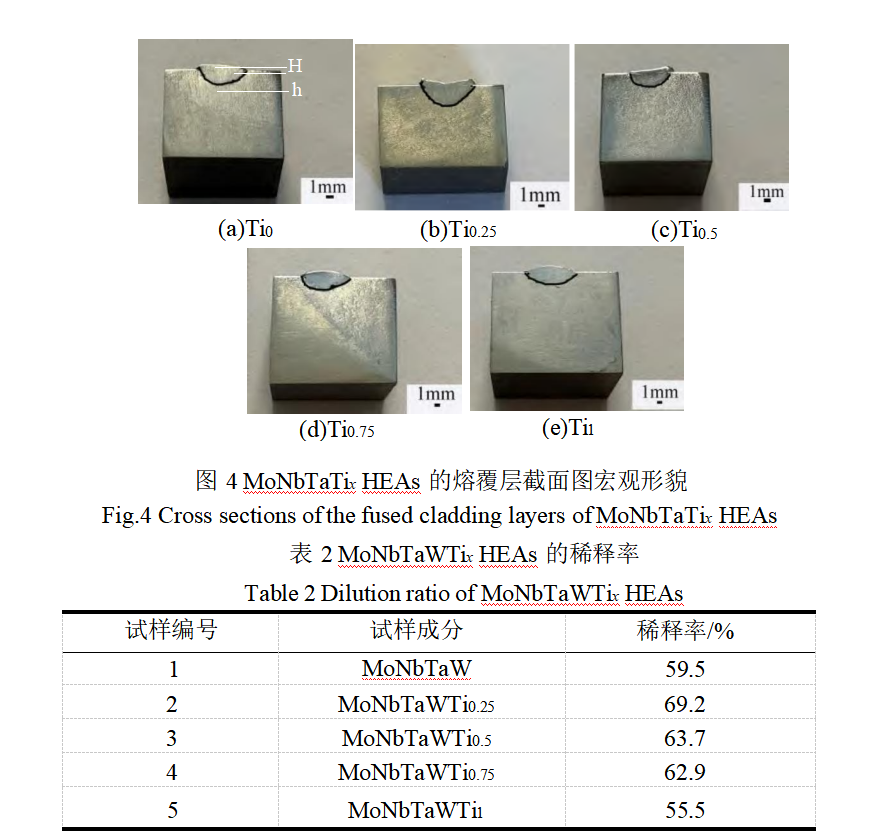
Figure 5 shows the microstructure morphology of the MoNbTaWTix coating. It can be observed that as the Ti content increases, the solidified structure at the top of the coating exhibits a significant gradient change, reflecting the comprehensive regulatory effect of Ti doping on the thermodynamic conditions of the melt pool: temperature gradient (G), solidification rate (R), and solute distribution behavior. At x=0, the coating predominantly consists of columnar crystals accompanied by equiaxed and dendritic crystals. Columnar crystals grow epitaxially along the direction of maximum heat flux, indicating a high ratio of temperature gradient (G) to solidification rate (R) during solidification. The appearance of equiaxed grains may be related to local composition undercooling at the melt pool edge or segregation of high-melting-point elements such as Mo and Nb. Trigranular formation results from interface instability caused by solute enrichment of C and N impurities during the late solidification stage. At x=0.25, columnar grains form. The introduction of Ti significantly increases the solute concentration in the melt pool, reducing the composition undercooling at the solidification front and inhibiting the nucleation of equiaxed grains.
However, the difference in atomic radius of Ti induces lattice distortion, increasing the non-uniformity of solid-liquid interfacial energy. This causes the growth direction of columnar crystals to exhibit random orientation due to local thermal flow perturbations. At x=0.5, both columnar and dendritic crystals appear. The disordered growth of columnar crystals correlates with the deflection of thermal flow direction caused by Marangoni convection within the melt pool [27], indicating that increased Ti content alters the flow field distribution in the melt pool. High Ti content promotes molten pool viscosity increase, slowing solute diffusion and leading to branching at dendrite tips to form localized dendrites. At x=0.75, microstructural complexity peaks, comprising columnar crystals, dendrites, equiaxed crystals, cellular crystals, and acicular crystals. This coexistence of multiple morphologies stems from high Ti content significantly lowering the liquidus temperature while increasing undercooling. This widens G/R value differences across regions, inducing heterogeneous nucleation of metastable TiN and promoting equiaxed grain formation. Rapid cooling in the later melting pool stage inhibits grain coarsening, forming acicular crystals. The enthalpy difference between Ti and W/Mo causes elemental segregation at grain boundaries, intensifying compositional fluctuations between dendrites. At x=1, acicular crystals form; the addition of excess Ti greatly increases the melting pool undercooling, triggering explosive nucleation during solidification. This suppresses oriented grain growth, resulting in ultrafine acicular crystals. At high Ti content, solute enrichment induces composition undercooling, leading to continuous evolution of interfaces. By controlling Ti content, customized preparation from anisotropic columnar crystals to ultrafine needle-like crystals can be achieved.
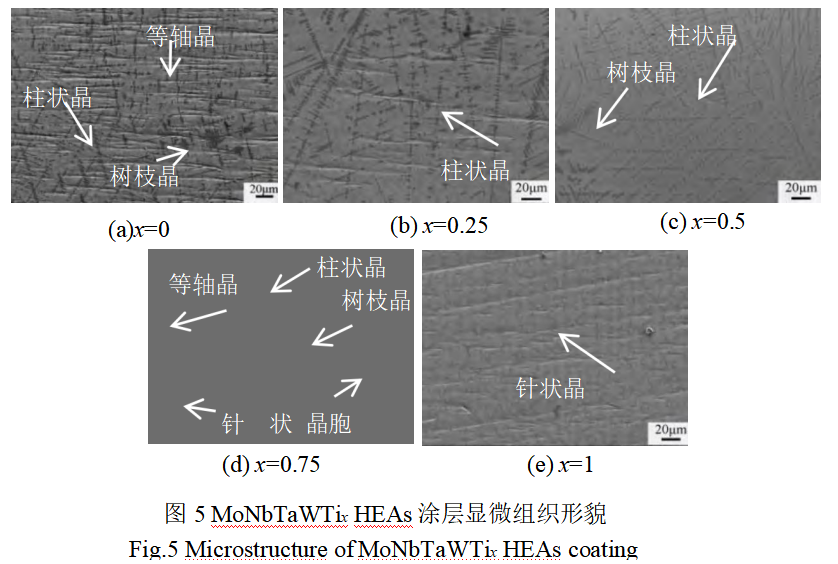
EDS analysis is shown in Figure 6. Refractory elements such as Mo, Nb, Ta, and W in MoNbTaWTi₀.₂₅ enrich in the equiaxed dendrite interstitial regions due to their high melting points and solute segregation effects during solidification, forming a solid solution matrix. Meanwhile, Ti and N concentrate within the dendrites, forming two precipitation phases—TiN and Ti₂N—through strong chemical interactions. C and O elements predominantly distribute in the dendrite-interstitial regions. XRD confirms the coexistence of TiN and Ti₂N. The dispersion of these two nitrides within grains effectively pin dislocations and impede grain boundary migration, conferring significant precipitation strengthening effects on the material [28]. Concurrently, the synergistic interaction between solid solution strengthening from refractory elements in the dendrite-interstitial regions and the nitrides within grains may substantially enhance the alloy's room-temperature/high-temperature strength and thermal stability.
2.3 Microhardness of Coatings
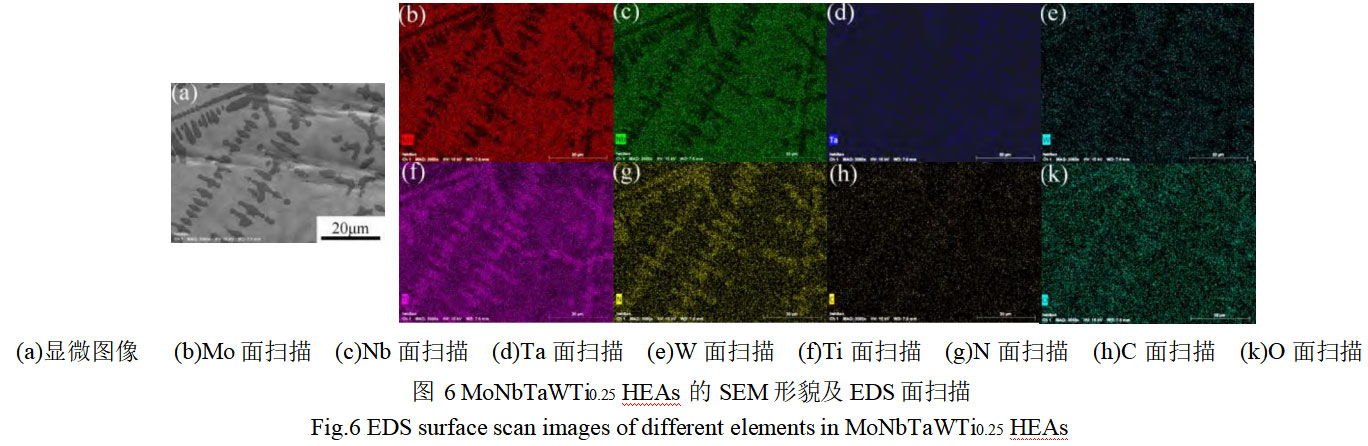
Figure 7 shows the microhardness of MoNbTaW HEAs coatings at different laser powers. When x = 0, 0.25, 0.5, 0.75, and 1, the maximum microhardness (HV0.1) of the coatings was 761, 738, 632, 695, and 723, respectively, while the average microhardness (HV0.1) was 742, 721, 621, 661, and 651 HV0.1, approaching three times the substrate hardness.
At x=0, Ti impurities in the raw material react with N/O elements to form Ti₂O and Ti₂N. The high hardness primarily stems from synergistic strengthening of the phases, jointly contributed by carbide strengthening from Mo₂C and dispersion strengthening from Ti₂N/Ti₂O. As x increases to 0.25–0.75, the TiN phase begins to form alongside coexisting Ti₂N. The initial decrease followed by recovery in hardness may relate to competing precipitation mechanisms: At x = 0.25, although nanoscale TiN precipitation introduces precipitation hardening, its initial formation may weaken solid solution strengthening due to phase transformation stress release or changes in matrix solubility. When x increases to 0.5, excess Ti may promote TiN coarsening or create interface stress concentrations with Ti₂N, reducing strengthening efficiency. The hardness recovery at x = 0.75 likely stems from optimized TiN distribution or size refinement of Mo₂C/Ti₂N, reinstating precipitation strengthening. When Ti content reaches 1, the TiN phase disappears and hardness recovers to 723 HV0.1. This may reflect nitrogen allocation imbalance due to excessive Ti, favoring Ti₂N formation and allowing Mo₂C and Ti₂N to regain strengthening dominance. Additionally, the solid solution strengthening effect of Ti exhibits nonlinear variation with increasing content, potentially enhancing dislocation motion hindrance through lattice distortion at x=1. Ti addition induces synergistic competition between softening and hardening phases, negatively impacting coating hardness enhancement.
2.4 Friction and Wear Properties of Coatings
Figure 8a shows the friction-wear curves of MoNbTaW HEAs coatings under different laser powers. Analysis was based on friction coefficient measurements stabilized after 5 min. Figure 8b presents coating wear volume and wear rate, calculated using the following equation:

where m is the mass loss (kg), ρ is the coating material density (kg/m³), d is the sliding distance (m), and L is the normal load (N) [23]. The average friction coefficients for Specimens 1–5 were 0.49, 0.45, 0.50, 0.37, and 0.42, respectively. The corresponding mass losses were 4.9, 6.6, 9.3, 6.5, and 4.7 mg, yielding wear rates of 3.59×10⁻¹³ kg•Nm⁻¹, 5.14×10⁻¹³ kg•Nm⁻¹, 8.19×10⁻¹³ kg•Nm⁻¹, 7.06×10⁻¹³ kg•Nm⁻¹, and 1.04×10⁻¹² kg•Nm⁻¹, respectively.
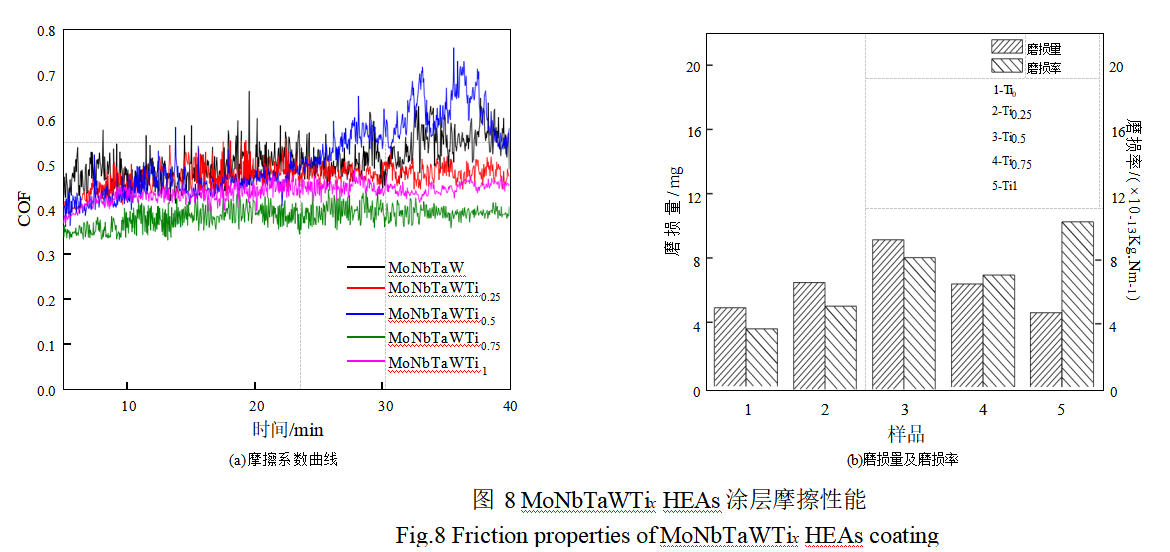
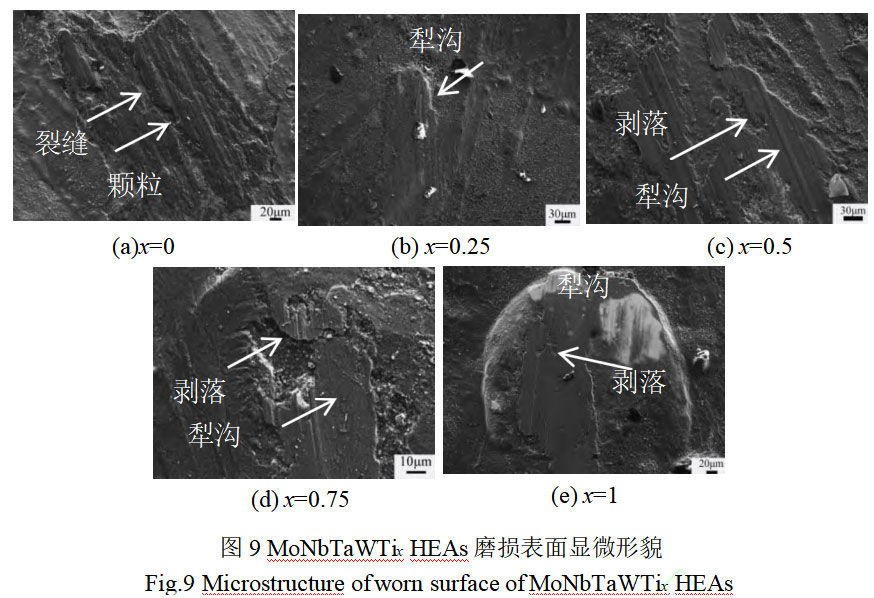
Figure 9 shows the microstructure of the worn surface of the MoNbTaWTix HEAs. It can be observed that at x=0, the alloy exhibits a high proportion of hard phases and the highest hardness. Both abrasive and adhesive wear occur. Surface cracks originate from the brittleness of the hard phases, but the high hardness suppresses material loss, resulting in the lowest wear rate (3.59×10⁻¹³ kg•Nm⁻¹). The absence of lubricating phases leads to a relatively high friction coefficient. At x=0.25, the coexistence of TiN and Ti₂O₂ improves the stability of the oxide layer, reducing the friction coefficient. The local hardness of TiN increases. Minor abrasive wear occurs, but microcracks lead to a higher wear rate than Specimen 1. At x=0.5, excess Ti dilutes the hard phase. Average hardness is lowest, with weak bonding at the hard/soft phase interface. Brittle spalling dominates, forming rough interfaces with spalling debris and the highest friction coefficient (0.50). At x=0.75, TiN and Ti₂O form a more continuous oxide layer. Ti₂O provides lubrication, yielding the lowest friction coefficient (0.37). The oxide layer fractures brittlely, forming spalling pits and debris, increasing the wear rate. At x=1, Ti content exceeds the critical value, causing matrix softening that prevents the hard phase Mo₂C from effectively supporting loads, intensifying abrasive wear. Plastic deformation of the soft matrix induces abrasive wear, with hard particles scratching the surface, resulting in the highest wear rate (10.4×10⁻¹³ kg•Nm⁻¹). The soft matrix reduces shear resistance, increasing the friction coefficient. Optimizing Ti content (e.g., within the x=0.25–0.75 range) balances lubricity, hardness, and interfacial bonding.
3 Conclusions
(1) At x=0, Ti2N, Ti2O, and Mo2C phases formed in the Ti-containing matrix coating. At x=0.25–0.75, increased Ti content provided sufficient Ti sources, promoting direct Ti-N reactions to form TiN coexisting with Ti2N. The coating generated TiN, Ti2N, Ti₂O, and Mo₂C phases. At x=1, the coating formed Ti₂N, Ti₂O, and Mo₂C phases. Changes in Ti content induced lattice distortion. The anomalous disappearance of TiN may result from altered Ti/N atomic ratios and Gibbs free energy differences, favoring the formation of Ti₂N over TiN.
(2) The dilution rate first increases then decreases with Ti content. This dual effect stems from Ti lowering the alloy melting point and accelerating solidification at high Ti concentrations. Controlling Ti content enables tailored preparation from anisotropic columnar crystals to acicular crystals. The synergistic competition between softening and hardening phases induced by Ti addition negatively impacts coating hardness, resulting in reduced microhardness.
(3) Without Ti addition, the presence of high-hardness phases yields the highest sample hardness and lowest wear rate. When Ti content ranges from 0.25 to 0.75, the formation of TiN and Ti₂O progressively improves lubricity, reducing the friction coefficient from 0.50 to 0.37. However, dilution of hard phases or delamination of the oxide layer leads to higher wear rates. At x=1, excess Ti induces matrix softening, exacerbating abrasive wear and causing the wear rate to surge to its maximum. By regulating Ti content in conjunction with interface strengthening, both lubricity and wear resistance can be synergistically enhanced.
Reference: Microstructure and Friction Properties of Laser-Clad MoNbTaWTi Alloy Coatings; Li Ying¹, Lei Changxin¹, Sun Zhouyu¹, Zhang Jiaqi¹, Wu Tao², Liu Ran¹; (1. School of Mechanical and Materials Engineering, North China University of Technology, Beijing 100144; 2. Zhejiang Institute of Technology, Hangzhou 310053) Keywords: laser cladding; refractory high-entropy alloy; microstructure; friction properties; Chinese Library Classification: TG174.4; TG115.5+8; TG335.86
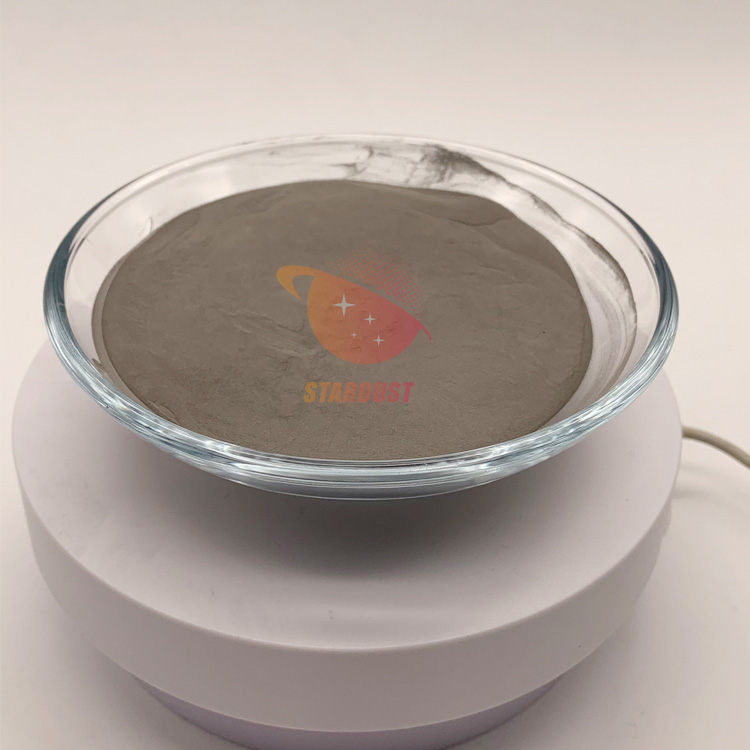
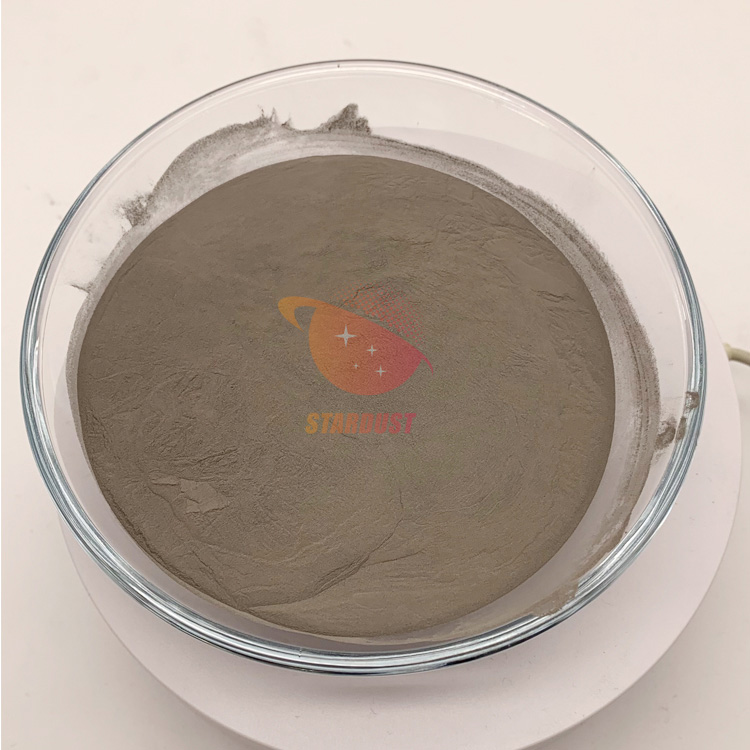
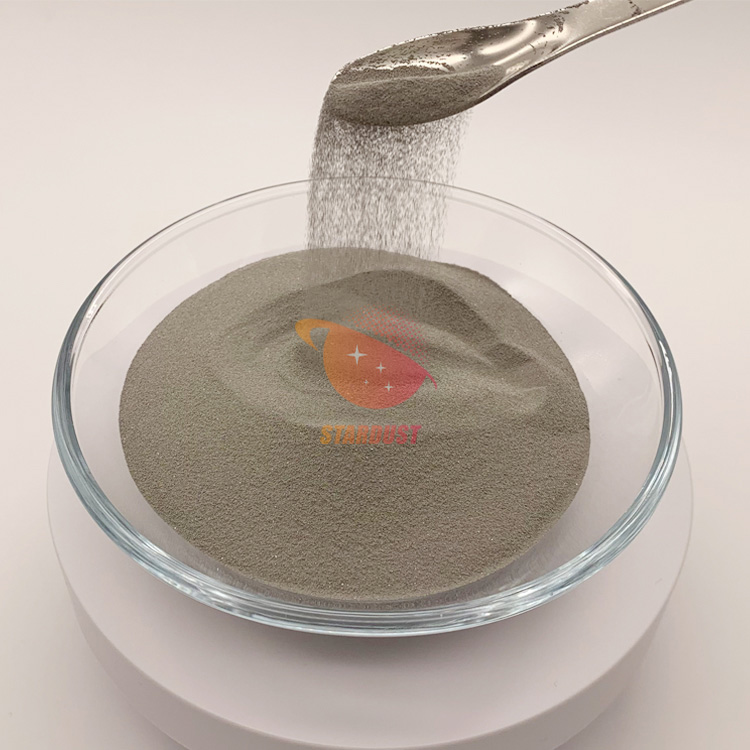
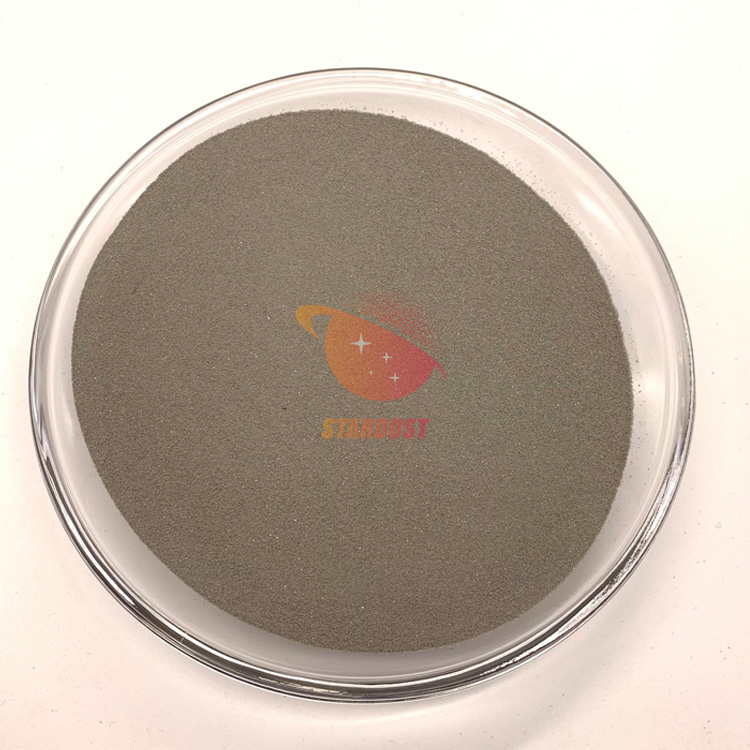
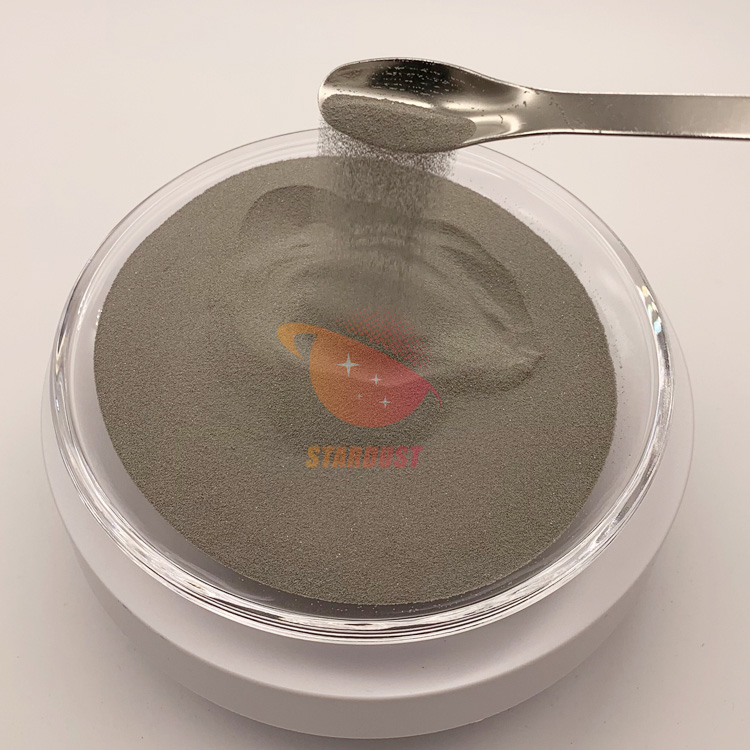
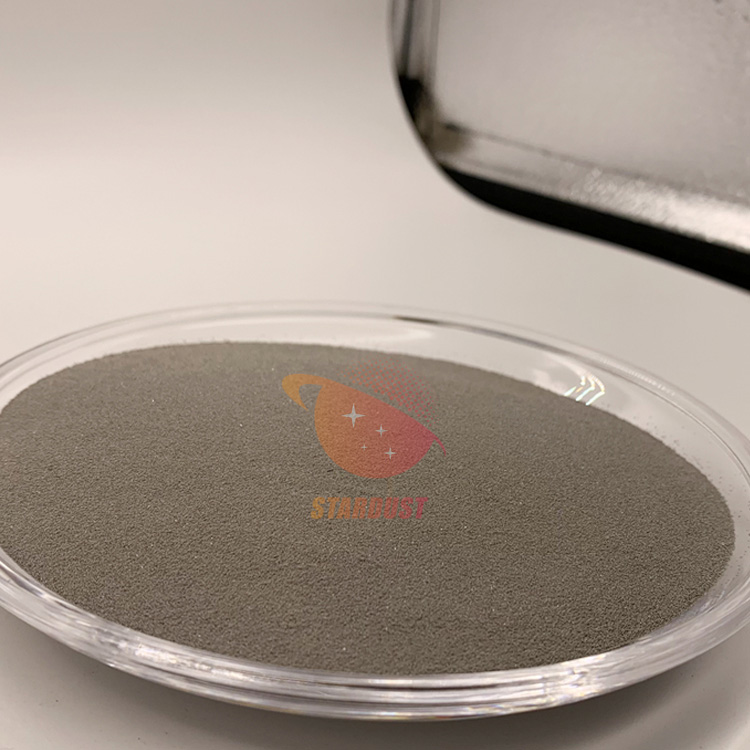
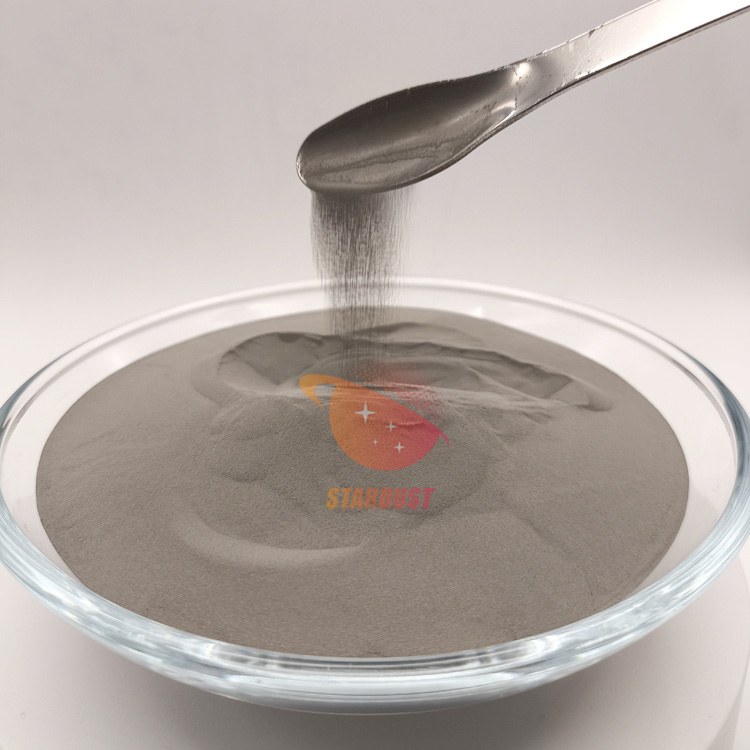
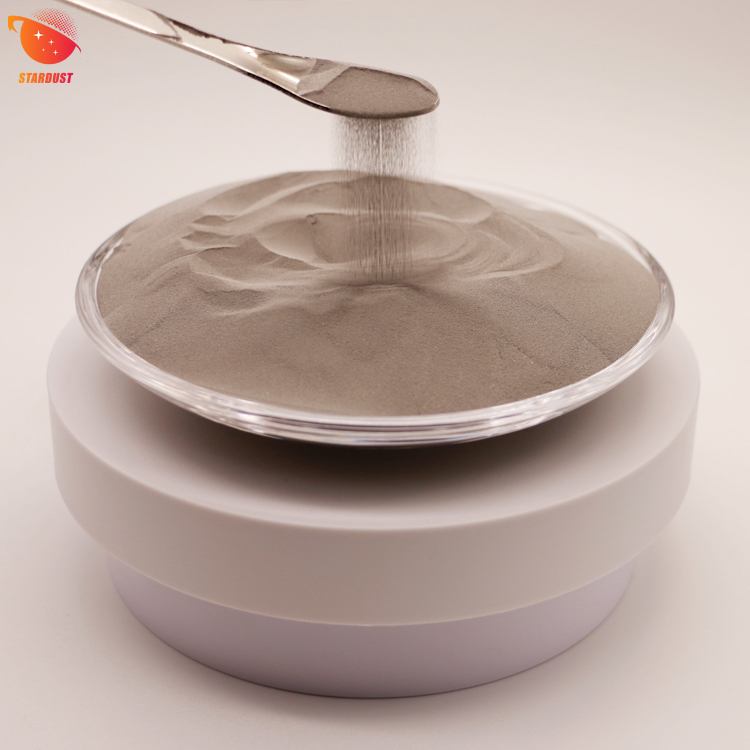
Stardust Technology's spherical MoNbTaWTi high-entropy alloy powder is produced using the company's core radiofrequency plasma spheroidization technology. Composed primarily of molybdenum, niobium, tantalum, tungsten, and titanium, it undergoes precise raw material blending, high-temperature plasma melting, rapid cooling and shaping, and graded screening processes to ensure stable and controllable powder quality. This production process complies with the company's ISO 9001:2015 quality management system standards, effectively reducing impurity content while enhancing sphericity and particle size uniformity. This powder exhibits high purity with low oxygen content, high sphericity, smooth surfaces free of satellite particles, concentrated particle size distribution, and excellent flow properties. Both bulk and tapped densities meet specifications. Leveraging the inherent properties of high-entropy alloys, it delivers superior high-temperature strength, corrosion resistance, and radiation resistance. Its chemically uniform composition without segregation enables compatibility with various precision forming processes. Its primary applications span extreme environments in aerospace, defense, and nuclear industries, including high-temperature structural components and nuclear reactor parts. It also holds potential in high-end equipment manufacturing, catalysis, and electromagnetic shielding. Our target clientele primarily consists of enterprises engaged in R&D of high-end refractory materials and precision forming processes. This includes aerospace supporting manufacturers, defense-related research and production units, nuclear equipment manufacturers, as well as universities and research institutes conducting high-entropy alloy research. We provide technical support for powder preparation and application, meeting customized requirements across diverse scenarios. For further product details, please contact our Sales Manager, Cathie Zheng, at +86 13318326187.




 IPv6 network supported